


China, Pakistan Call for Immediate Ceasefire in Iran War, Push Peace Talks ‘As Soon As Possible’


China and Pakistan on Tuesday jointly urged an immediate halt to the ongoing war in the Middle East, pressing for peace negotiations to begin at the earliest as both countries moved to deepen coordination over the Iran conflict. The call came after senior Pakistani officials visited Beijing, where the two sides unveiled a joint initiative aimed at easing tensions and restoring stability across the Gulf and wider Middle East.

AI-generated summary, reviewed by editors
China, Pakistan unveil joint initiative on Gulf crisis
Following high-level meetings in Beijing, the two countries announced a joint framework "for restoring peace and stability in the Gulf and Middle East region", signalling a more coordinated diplomatic effort amid fears that the conflict could widen further.
Both Beijing and Islamabad have increasingly positioned themselves as potential mediators in the crisis, with Pakistan publicly stating that it is prepared to host "meaningful talks" between the United States and Iran if required.
Pakistan Foreign Minister Ishaq Dar met Chinese Foreign Minister Wang Yi during the visit, with Beijing later saying both sides had agreed to "strengthen strategic communication and coordination on the Iran situation and ... make new efforts towards advocating for peace".
Five-point plan begins with ceasefire demand
After the meeting, Pakistan's foreign ministry said China and Pakistan had agreed on a five-point peace proposal, the first and most urgent element being the "immediate cessation of hostilities" and the "start of peace talks as soon as possible".
The two governments also stressed that diplomacy remains the only realistic path forward, especially as confusion continues over whether direct negotiations between Washington and Tehran are actually underway. While the United States has claimed talks are in progress, Iran has denied that any official negotiations are taking place.
On the issue of dialogue, the joint position was unequivocal. The two countries said dialogue and diplomacy were "the only viable option to resolve conflicts".
The statement further added, "China and Pakistan support the relevant parties in initiating talks, with all parties committing to peaceful resolution of disputes, and refraining from the use or the threat of use of force during peace talks," it added.
Civilian safety, shipping routes and Hormuz in focus
Beyond the ceasefire call, the proposed plan also placed strong emphasis on protecting civilians and essential infrastructure. China and Pakistan called for an end to strikes targeting civilians and non-military installations, specifically mentioning energy facilities and desalination plants.
Another major concern raised in the initiative was maritime security in the Strait of Hormuz, one of the world's most strategically critical shipping chokepoints. The two sides said shipping lanes must remain open and protected to ensure "the early and safe passage of civilian and commercial ships" through the narrow waterway.
The issue has become increasingly urgent as global concerns grow over disruptions to maritime traffic and energy supplies caused by the conflict.
China and Pakistan also said any long-term settlement must rest firmly on the principles of the UN Charter and international law.
Dar's regional diplomacy comes amid widening war concerns
Dar's Beijing trip followed a flurry of regional diplomacy over the weekend. On Sunday, he hosted foreign ministers from Saudi Arabia, Egypt and Turkey for discussions focused on ways to stop the war, which began after US-Israeli strikes on Iran on February 28.
The conflict has sharply raised fears of wider regional instability, with growing alarm over its possible impact on oil flows, commercial shipping and broader geopolitical alignments in West Asia.
China remains one of Iran's most important international partners, but Beijing has so far stopped short of announcing any military backing for Tehran. Instead, Chinese officials have repeatedly called for a ceasefire and de-escalation.
Meanwhile, Tehran continues to publicly deny that it is engaged in formal talks with Washington. However, according to an anonymous source cited by Iran's Tasnim news agency, Iran has sent a response to President Donald Trump's 15-point proposal aimed at ending the war, with Islamabad reportedly acting as the intermediary.
Pakistan's role in this diplomatic channel highlights its growing significance in regional crisis management, especially given its close ties with China.
At the same time, Beijing is also balancing its own regional diplomacy elsewhere. While Pakistan remains one of China's closest strategic partners, China has separately urged "calm and restraint" in Islamabad's tensions with Afghanistan. Earlier this month, a Chinese special envoy spent a week mediating between the two neighbours, according to China's foreign ministry.
-
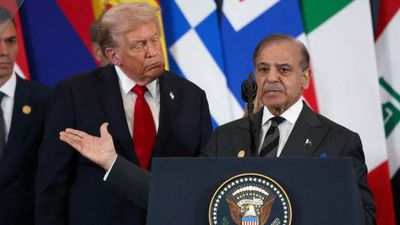 Trump Claims Iran Has Accepted Most of US 15-Point Peace Plan, Signals Possible Breakthrough
 -
 IPL 2026: Rohit Sharma’s Blazing 78 Powers Mumbai Indians to Big Win Over Kolkata Knight Riders
 -
 Gold Silver Rate Today, 29 March 2026: City-Wise Prices, MCX Update On Gold, Silver Rates Across India
 -
 Gold Rate Today 30 March 2026: IBJA Benchmark Rates, Tanishq, Kalyan, Malabar, Joyalukkas Prices
 -
 Gold Silver Rate Today, 30 March 2026: City-Wise Prices, MCX Update On 24K Gold, 22K Gold And Silver
 -
 Gold Rate Today 29 March 2026: Latest IBJA Rates With Tanishq, Kalyan, Malabar, Joyalukkas Prices
 -
 LPG Crunch: Karnataka Brings New SOPs, Makes PNG Registration Mandatory for Businesses
 -
 Hyderabad Gold Silver Rate Today, 30 March 2026: Check Fresh 24K, 22K, 18K Gold And Silver Prices In City
 -
 Bengali Actor Rahul Arunoday Banerjee Dies At 43 After Reported Drowning In Digha
 -
 Hyderabad Weather Alert: Intense Thunderstorms, Hail And Lightning Likely On March 30-31
 -
 Who Is Rajat Dalal’s Wife? Bigg Boss 18 Fame Star Announces Wedding, Shares Dreamy Photos
 -
 Opinion Poll For Kerala Assembly Election 2026: Ldf Strength In Kannur And Kasaragod



 Click it and Unblock the Notifications
 Sign in with Google