


Bangladesh’s Hindu Killings Are Not Isolated Crimes, They Are a Pattern of Failure


The killings of Hindu men across Bangladesh are not isolated crimes but the latest expression of a long-running pattern of persecution faced by the Hindu minority. Within less than ten weeks, at least 17 Hindus have been killed, many through mob violence and extrajudicial punishment, underscoring how quickly minorities become exposed when political unrest intersects with religious radicalism and institutional failure.
Those killed include Dipu Chandra Das, Amrit Mondal (Samrat), Dilip Bormon, Prantosh Kormokar, Utpol Sarkar, Zogesh Chandra Roy, Suborna Roy, Shanto Das, Ripon Kumar Sarkar, Pratap Chandra, Swadhin Chandra, Polash Chandra, Samir Das, Sarat Mani Chakraborty, Rana Pratap Bairagi, Susen Chandra Sarkar, and Ratan Shuvo Kar. While authorities have attempted to present each death as a separate criminal episode, the cumulative pattern reveals systematic vulnerability rather than coincidence.
AI-generated summary, reviewed by editors
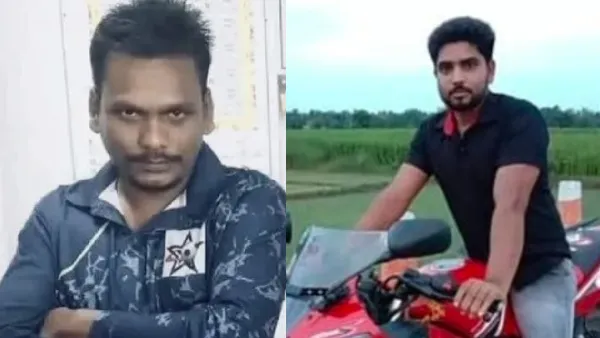
The persecution of Hindus in Bangladesh points to a deep-rooted strain of radicalism that has been allowed to entrench itself within the country's socio-political fabric. Communal bigotry, reinforced by sustained anti-India rhetoric, has steadily degraded the environment in which minorities live. Public discourse increasingly frames hostility toward Hindus as ideological resistance rather than extremism, blurring the line between political mobilisation and communal intimidation.
The language of change, reform and student-led movements has largely served as a superficial justification for this shift. In practice, these narratives have been instrumentalised to advance radical agendas, shield extremist mobilisation from scrutiny and recast Bangladesh as a persistent irritant to India, positioned in opposition to India's growing stature as a leading voice of the Global South. Domestic minorities have become collateral damage in this ideological posture.
A significant number of these killings followed blasphemy allegations, a tool for targeting Hindus that often lacks evidence but is sufficient to incite mobs. In other cases, victims were accused of criminal conduct to justify "mob justice." The killing of Dipu Chandra Das in Mymensingh (December 18, 2025) exemplifies this: accused of derogatory remarks, he was tied to a tree and set on fire. Investigators later found no evidence of blasphemy.
The violence continued through the election eve. On February 11, 2026, 28-year-old tea worker Ratan Shuvo Kar was found dead in Moulvibazar with his limbs bound; days earlier, 62-year-old rice trader Susen Chandra Sarkar was hacked to death in Mymensingh. Regardless of whether the stated motive was robbery or land disputes, the lack of police protection during these high-tension periods reinforces a perception that due process is selectively applied.
These killings unfolded amid widespread protests and the transition from the Muhammad Yunus-led interim government to the newly elected BNP-led administration. As seen during previous periods of unrest, Hindu communities once again became disproportionately exposed, targeted because they were perceived as lacking political protection.
Religion has increasingly been elevated into a central political instrument. Radical Islamist groups and their affiliates, including student organisations, have relied on religious nationalism to mobilise support ahead of elections. Lacking substantive governance agendas, these groups depend on identity-based mobilisation, with Hindus becoming convenient targets in a polarised environment.
Arrests have followed some incidents, but for Hindu minorities, such responses offer little reassurance. Protection is measured not by post-incident condemnation but by preventive action, rapid intervention and consistent accountability all of which have repeatedly failed.
The persecution of Hindus in Bangladesh is defined by repetition: repeated allegations, repeated mobs, repeated deaths and repeated official assurances that fail to alter outcomes. The killings of Hindu minorities are not anomalies; they are part of an established pattern in which political unrest, radical mobilisation and anti-India posturing converge, leaving minorities acutely vulnerable.
Until allegations religious or criminal are addressed through lawful mechanisms and minorities are protected irrespective of political expediency, the persecution of Hindus in Bangladesh will persist.
-
 RCB Vs CSK IPL 2026 Tickets At Chinnaswamy: Official Sale, Metro Perks, And Entry Guidelines
 -
 Hyderabad Gold Silver Rate Today, 1 April 2026: Check 18K, 22K, 24K Gold And Silver Prices In Nizam City
 -
 War Lockdown Notice Goes Viral Over Iran Claims, Sparks Panic Online
 -
 Hyderabad Gold Silver Rate Today, 31 March 2026: Gold And Silver See Fresh Movement, Check Latest City Rates
 -
 Gold Silver Rate Today, 1 April 2026: City-Wise Prices Rise Sharply, MCX Gold And Silver Surge
 -
 Laid Off After 20 Years Via Email: Oracle Faces Criticism As Viral Post Highlights Cancer Patient’s Job Loss
 -
 UP STF Nabs Maulana Abdullah Salim Over Controversial Comment On CM Yogi's Mother
 -
 Iran-US War: Donald Trump’s Missteps And The NATO Paradox
 -
 Iran Threatens To Hit US Companies in Region From April 1, Names Microsoft, Apple, Tesla, Boeing
 -
 Trump Says Iran Is ‘Incapable’ Of Building Nuclear Weapon, US Will Be Out ‘Pretty Quickly’
 -
 Thunderstorm Warning In Delhi NCR: IMD Issues Orange Alert Amid Sudden Weather Shift
 -
 Tamil Nadu Election Predictions: AIADMK Fails To Unseat Stalin's DMK, Says Pre Poll Survey



 Click it and Unblock the Notifications
 Sign in with Google