


India Overtakes Japan To Become Fourth-Largest Economy In Global GDP Outlook
India's economy rises to the fourth-largest global GDP, surpassing Japan, with 2025 growth of 8.2% and forecasts from major agencies indicating continued expansion. Domestic demand, consumption, and reforms underpin momentum despite global headwinds, aiming for higher middle-income status by 2047 and potential third place by 2030.


India has moved ahead of Japan to claim fourth place in the global GDP rankings, with the India economy now valued at USD 4.18 trillion. A government update on economic reforms in 2025 reported that India remains the fastest-growing major economy, supported by strong domestic demand and improving macroeconomic conditions.
Real GDP in the India economy grew by 8.2 per cent in the second quarter of 2025–26. This followed 7.8 per cent growth in the first quarter. Growth was 7.4 per cent in the final quarter of the previous financial year. The trend highlights steady acceleration despite global trade headwinds and weak external demand.
AI-generated summary, reviewed by editors

India economy overtakes Japan and targets Germany by 2030
The government release stated, "With GDP valued at USD 4.18 trillion, India has surpassed Japan to become the world's fourth-largest economy, and is poised to displace Germany from the third rank in the next 2.5 to 3 years with a projected GDP of USD 7.3 trillion by 2030." The United States and China still hold the top two spots globally.
The same update stressed that domestic demand is the main driver for the India economy. Strong private consumption continues to support services and manufacturing. As a result, India is expanding even as global trade faces uncertainty. Resilient consumption in urban centres has also helped offset weaker external demand and patchy export performance.
Global agencies back India economy growth projections
Multiple international institutions have issued upbeat forecasts for the India economy. The World Bank expects 6.5 per cent growth in 2026. Moody's projects that India will stay the fastest-growing G20 economy, with 6.4 per cent growth in 2026 and 6.5 per cent in 2027. The IMF now estimates 6.6 per cent growth in 2025 and 6.2 per cent in 2026.
The OECD forecasts 6.7 per cent growth for the India economy in 2025 and 6.2 per cent in 2026. S&P sees 6.5 per cent growth in the current fiscal year and 6.7 per cent in the next. The Asian Development Bank has raised its 2025 projection to 7.2 per cent. Fitch now expects FY26 growth at 7.4 per cent, supported by stronger consumer spending.
| Institution | Year | Growth forecast for India economy |
|---|---|---|
| World Bank | 2026 | 6.5% |
| Moody's | 2026 | 6.4% |
| Moody's | 2027 | 6.5% |
| IMF | 2025 | 6.6% |
| IMF | 2026 | 6.2% |
| OECD | 2025 | 6.7% |
| OECD | 2026 | 6.2% |
| S&P | Current fiscal | 6.5% |
| S&P | Next fiscal | 6.7% |
| Asian Development Bank | 2025 | 7.2% |
| Fitch | FY26 | 7.4% |
A government statement on the India economy added, "India is among the world's fastest-growing major economies and is well-positioned to sustain this momentum. With the ambition of attaining high middle-income status by 2047, the country is building on strong foundations of economic growth, structural reforms, and social progress."
Macroeconomic indicators for the India economy are also showing improvement. The release said inflation is below the lower tolerance threshold. Unemployment is falling, while exports are gradually recovering. Credit to the commercial sector remains healthy, and financial conditions are supportive. Rising urban consumption is further lifting demand, reinforcing the current growth cycle.
With stronger growth data, favourable forecasts and improved macro fundamentals, the India economy is set to consolidate its new position above Japan. Policymakers are aiming to build on current reforms so that India can challenge Germany for third place by 2030, while also pursuing the wider goal of high middle-income status by 2047.
-
 Gold Rate Today 31 March 2026: Latest IBJA Benchmark And Tanishq, Kalyan, Malabar, Joyalukkas Rates
 -
 Gold Rate Today 30 March 2026: IBJA Benchmark Rates, Tanishq, Kalyan, Malabar, Joyalukkas Prices
 -
 Gold Silver Rate Today, 30 March 2026: City-Wise Prices, MCX Update On 24K Gold, 22K Gold And Silver
 -
 LPG Crunch: Karnataka Brings New SOPs, Makes PNG Registration Mandatory for Businesses
 -
 Hyderabad Gold Silver Rate Today, 30 March 2026: Check Fresh 24K, 22K, 18K Gold And Silver Prices In City
 -
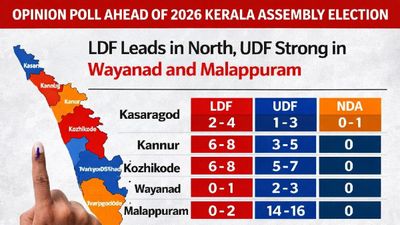 Opinion Poll For Kerala Assembly Election 2026: Ldf Strength In Kannur And Kasaragod
 -
 Tamil Nadu Polls 2026: Vijay Reveals Rs 645 Crore Assets, Rs 266 Crore in Banks; Know All His Declaration
 -
 Mumbai Metro Line 9 Set for April 3 Launch, Dahisar-Mira Bhayandar to Get Direct Boost
 -
 Hyderabad Gold Silver Rate Today, 31 March 2026: Gold And Silver See Fresh Movement, Check Latest City Rates
 -
 Gold Silver Rate Today, 31 March 2026: City-Wise Prices, MCX Trend As Gold Rises And Silver Slips
 -
 Rahul Arunoday Banerjee Autopsy Report: Actor Was Underwater For Over An Hour, Sand Found In Lungs
 -
 Thunderstorm Warning In Delhi NCR: IMD Issues Orange Alert Amid Sudden Weather Shift



 Click it and Unblock the Notifications
 Sign in with Google