


Ratko Mladic - The Butcher of Bosnia

The Bosnian Serb commander convicted of genocide for Srebrenica has died in UN custody at 84 — the last major architect of Bosnia's destruction to answer to a court.
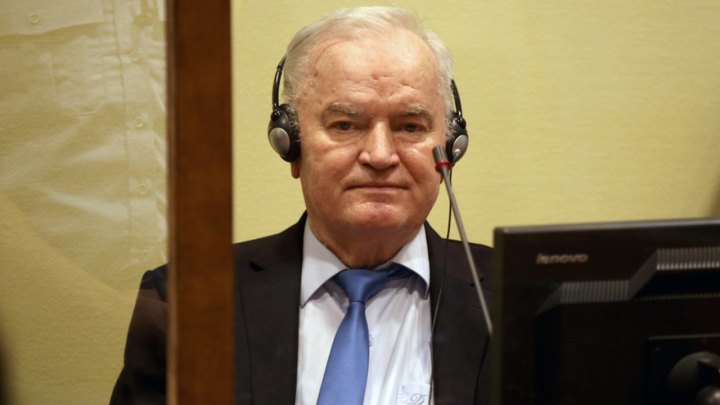
◆ At a glance
Who he was, in six lines
Role
Commander, Army of Republika Srpska (VRS), 1992–1996
Backed by
Weapons and troops inherited from the Yugoslav People's Army; armed by Serbia
Convicted 2017
Genocide, crimes against humanity & war crimes
Sentence
Life imprisonment · appeal rejected 2021
Signature crime
The Srebrenica genocide, July 1995
Also charged over
The 1,425-day siege of Sarajevo
▲ The war in numbers
A country broken between 1992 and 1995
The breakup of Yugoslavia turned Bosnia into Europe's deadliest battlefield since 1945. The figures below are the scale Mladić's campaign left behind.
● How Yugoslavia fell apart
From one federation to open war
For decades Yugoslavia held together Serbs, Croats, Bosniaks and others. When communist rule weakened after Tito, nationalist movements pulled it apart — and Bosnian Serbs, backed by Serbia and the Yugoslav military, fought to seize territory for a Serb-controlled state.
⌖ A war without front lines
Why the map itself was lethal
Bosnia was a patchwork of Bosniak, Serb and Croat communities with no neat front. As armies advanced, they left hostile pockets behind them. A village could wake up surrounded overnight. Soldiers who took a wrong road, crossed a ridge or moved through fog could suddenly find themselves behind enemy lines — and civilians could be trapped inside enclaves cut off from the rest of the country.
Territory was taken not only by beating an opposing army, but by surrounding communities, cutting them off, and driving people from the land. Roads, valleys and seemingly forgotten villages became prizes because holding them could link one Serb region to another — or strangle a Bosniak enclave. Between the armies lay the literal no man's land, where survival could hinge on a few metres of ground, a trench or a minefield.
A schematic of the fractured battlefield — the pattern that repeated across Bosnia. Drawn for this page.
The fragmentation on the ground was just as stark. Mladić's forces, better armed than their rivals in the early war, rapidly seized vast areas — besieging towns, shelling Sarajevo, and driving hundreds of thousands of non-Serbs from their homes. Only in 1995, as Croat and Bosniak counteroffensives clawed territory back and NATO struck from the air, did the balance begin to shift.
Srebrenica · July 1995
The safe area that wasn't
By 1995 several Bosniak towns in eastern Bosnia were islands inside Serb-held land. The UN declared Srebrenica a "safe area", protected on paper by international peacekeepers — hoping the promise alone would shield the civilians trapped inside.
In July, Mladić's forces walked in. Cameras caught him touring the town, declaring it was being given to the Serb people, handing sweets to children and promising safe passage — while men and boys were separated from their families and taken away. Dutch peacekeepers, overwhelmed and unwilling to fight, stood aside. Mladić's troops had already shown their contempt for the West: when NATO threatened air strikes, they seized UN peacekeepers and chained them near targets as human shields.
men and boys systematically executed over several days, then buried in mass graves. To hide the scale of the crime, bodies were later dug up and moved to secondary graves across remote country. Families are still identifying remains three decades on.
"Germans had Hitler, Serbs have Mladić."
— Munira Subašić, of the Mothers of Srebrenica, who lost her husband and son
◆ From UN failure to NATO intervention
The war the world was slow to stop
For much of the conflict the West looked paralysed — enough involvement to raise the expectation of protection, rarely enough force to provide it.
The United Nations deployed peacekeepers under a limited mandate, while European powers struggled to agree on intervention. The Clinton administration inherited the dilemma: President Bill Clinton at first resisted sending American ground troops, arguing the United States could not impose peace on communities determined to fight. But Washington gradually took a firmer line — pushing sanctions, backing humanitarian operations, enforcing a no-fly zone and, eventually, supporting stronger NATO action alongside European allies.
Srebrenica was the turning point. The massacre exposed the catastrophic limits of the "safe area" policy and hardened the case for decisive force. NATO's sustained air campaign against Bosnian Serb positions, combined with Croat and Bosniak advances on the ground and steady American diplomatic pressure, finally forced the Serb leadership to the table. The result was the Dayton Peace Agreement of December 1995 — which stopped the killing, but built the peace around the very ethnic lines the war had hardened. Critics argued the West had waited far too long while atrocities mounted.
▬ A war behind enemy lines
Two films, two ways to be lost in Bosnia
The strange geography of the war is captured by two very different films — one about being behind enemy lines, the other about being trapped between them.
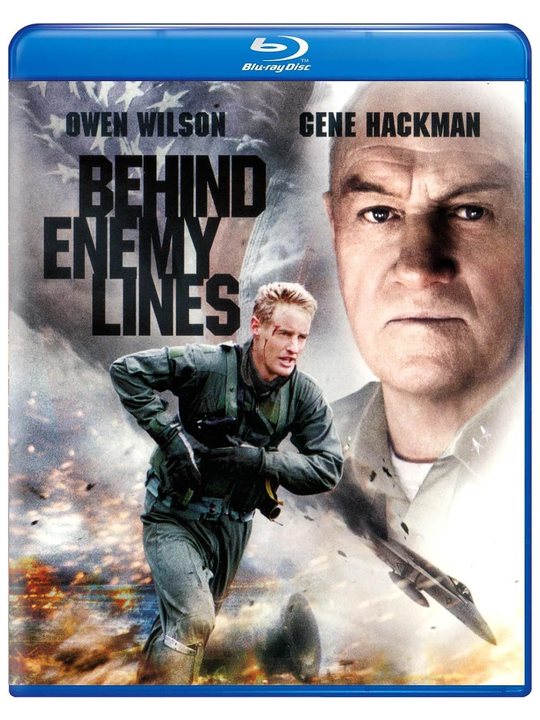
Behind Enemy Lines
Turns the idea of an American airman stranded in hostile Bosnian territory into a survival story. It fictionalises and simplifies the history — and its hero narrative shouldn't be mistaken for an account of the war — but it captures one real dread: being isolated and hunted deep inside enemy-held ground, unsure who controls the land around you.
▸ behind the lines
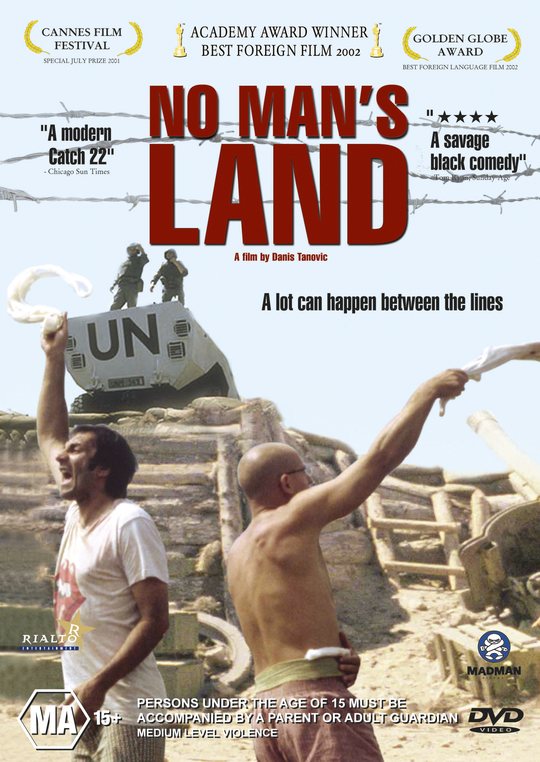
No Man's Land
Captures the absurdity and tragedy of soldiers trapped between opposing forces in a single trench, where even moving can mean death. Tanović had lived through the war and worked as a cameraman for the Bosnian Army, giving the film an intimacy and anger many outsiders' portrayals lacked.
▸ between the lines
Srebrenica was the real version of both: an isolated pocket of Bosniak civilians deep inside Serb territory, dependent on an international promise that ultimately failed.
§ From general to prisoner
Sixteen years a fugitive, then a life sentence
Born into a region scarred by the Second World War — his father, a partisan, killed in 1945 — Mladić rose through the Yugoslav army before commanding the Bosnian Serb forces. Indicted while the war still raged, he then vanished for years, sheltered by nationalist networks in Serbia.
◆ What remains
The man is gone. The map he forced is not.
Dayton stopped the killing but built Bosnia's peace around the very ethnic divisions the war had hardened — two entities, a fractured state, and communities still living beside the graves.
The most haunting image of the war may not be a battlefield at all. It is a person trapped between the lines — behind enemy territory, unable to go home, and discovering that the people who promised protection never arrived.


 Click it and Unblock the Notifications

 Sign in with Google

