


A rubidium heartbeat for India's own GPS
This is a story about GPS, the satellite system that tells the world where things are, and India's effort to have its own. On the night of 30 October, ISRO launched NVS-03, a new satellite for NavIC, India's home-grown answer to GPS.
- Rocket
- GSLV-F18
- Lift-off
- 23:51 IST
- Launched from
- Sriharikota
- Weight
- ≈ 2,250 kg
- Signals
- L1 · L5 · S
What is GPS?
GPS stands for Global Positioning System. It is a group of about 30 satellites owned by the United States, circling about 20,000 km above us. Ships, aircraft, trains, trucks, the armed forces, farm machines and mobile phones all use it to find out exactly where they are.
Each satellite keeps sending out a simple message using radio waves: “This is where I am, and this is the exact time on my clock.”
Any device that picks up these signals is called a GPS receiver. It could sit in a ship, a plane, a car or a phone. The receiver does not send anything back. It only listens. Here is how it uses those messages:
- Radio waves travel at a fixed, known speed, about 3 lakh km every second.
- The receiver notes when the message was sent and when it arrived. The gap tells it how long the message took to travel.
- Time taken × speed = distance. So the receiver knows how far away that satellite is.
- Do this with several satellites at once, and there is only one spot on Earth that is the right distance from all of them. That spot is you.
How three distances find you
Why the clock matters so much
Radio waves are so fast that timing has to be almost perfect. A tiny mistake in time becomes a big mistake in distance.
Take one microsecond (written µs). It is one millionth of a second. If you split one second into ten lakh equal parts, one µs is a single part. In that short moment, a radio wave travels about 300 metres.
So if a satellite's clock is wrong by just 1 µs, your map could show you 300 metres away, on a different street.
That is why every navigation satellite carries an atomic clock, the most precise kind of clock there is.
Why India wants its own system
GPS is free, but it is run by the US military. In a crisis, the US can weaken or switch off the signal over any region. India learned this the hard way. Officials often recall the 1999 Kargil conflict, when India could not get the precise location data it needed from foreign satellites.
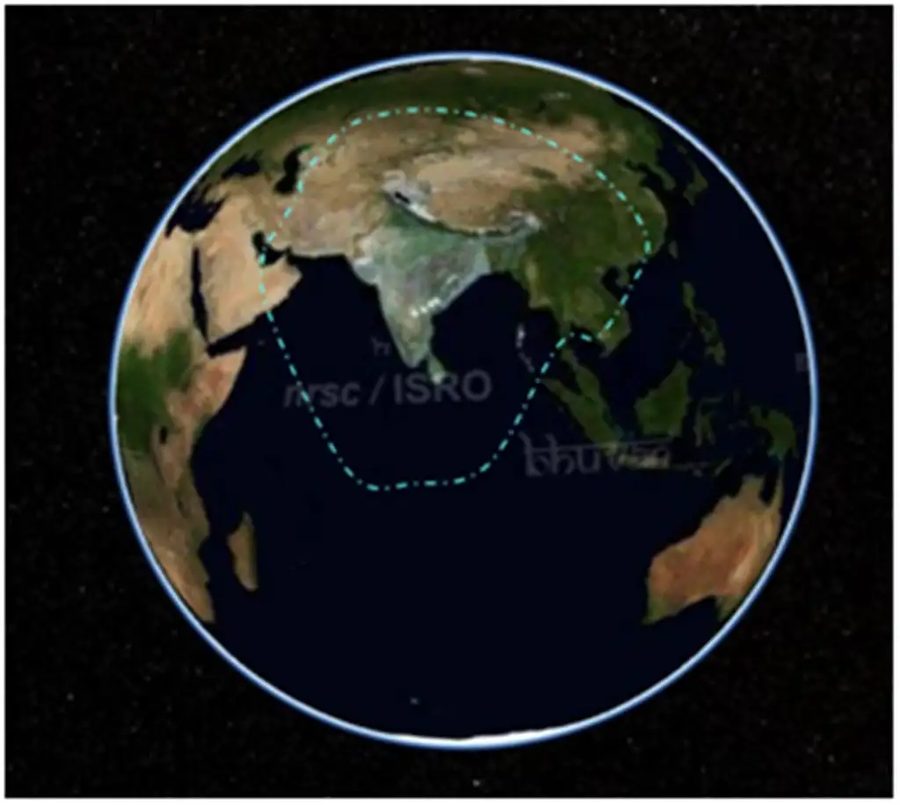
So India built its own: NavIC, short for Navigation with Indian Constellation. Nāvik also means sailor. Unlike GPS, it does not try to cover the whole world. Its satellites stay above the Indian Ocean region and cover India plus about 1,500 km beyond its borders.
Having our own system matters for three reasons:
- Defence. The armed forces need location signals that no other country can switch off. NavIC has a secure, encrypted service just for them.
- Accurate time. Banks, stock exchanges, mobile networks and power grids all rely on satellite clocks to stay in step. Today, most of them take that time from GPS.
- Self-reliance. Making the satellites, clocks and chips in India builds skills and jobs here.
How many countries have their own?
Only six such systems work today. Four cover the whole world. Two cover only their own region. Since Galileo belongs to the European Union, that is five countries plus the EU. India is one of them.
GPS
Global- Satellites
- About 31
- Working since
- 1995
GLONASS
Global- Satellites
- About 24
- Working since
- 1990s, fully again from 2011
Galileo
Global- Satellites
- About 24 or more
- Working since
- 2016
BeiDou
Global- Satellites
- About 35
- Working worldwide since
- 2020
NavIC
Regional- Satellites
- 4 working, with NVS-03
- Covers
- India + about 1,500 km around it
QZSS
Regional- Satellites
- About 5 to 7
- Covers
- Japan and nearby Asia-Pacific
KPS
Being built- Satellites
- Planned
- Status
- Not working yet
Numbers are approximate and change as satellites are launched or retired.
How a rubidium atomic clock works
Every clock counts something that repeats. An old wall clock counts the swings of a pendulum. A quartz wristwatch counts the vibrations of a tiny quartz crystal. Quartz is good, but it slowly runs fast or slow as it heats up, cools down or ages.
An atomic clock fixes this by checking itself against atoms of a metal called rubidium. Rubidium atoms react to one exact radio frequency and nothing else. That frequency never changes, anywhere in the universe.
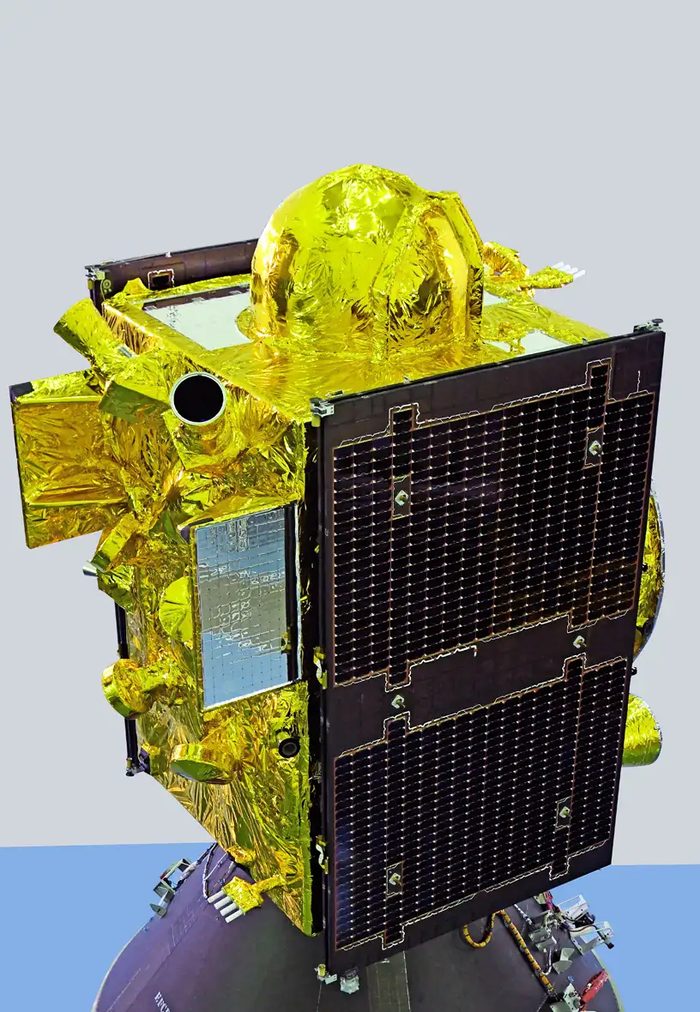
The clock on NVS-03 was made in India, by ISRO's Space Applications Centre in Ahmedabad. The satellite also carries imported clocks as backup. Clock failures on older NavIC satellites, which used only imported clocks, were the main reason the system weakened.
How much better is an atomic clock?
| Clock | Off by, after one day | Location mistake that would cause |
|---|---|---|
| Ordinary wristwatch | About half a second | About 1.5 lakh km |
| Rubidium atomic clock in a satellite | A few billionths of a second | About 1 to 2 metres |
Rough, typical figures. Ground stations also keep checking each satellite's clock and sending corrections, so real errors stay even smaller.
NavIC is back to four
NavIC needs at least four working satellites to tell you your location on its own. In March 2026, the clock on one satellite, IRNSS-1F, stopped working. That left only three. In July 2026, the government told Parliament that NavIC could no longer give locations by itself, though it could still give accurate time.
An earlier satellite, NVS-02, was launched in January 2025 but got stuck in the wrong orbit when its engine could not fire.
NVS-03 brings the number back to four. It will first take a few weeks to climb to its final position in space and be tested before it starts working.
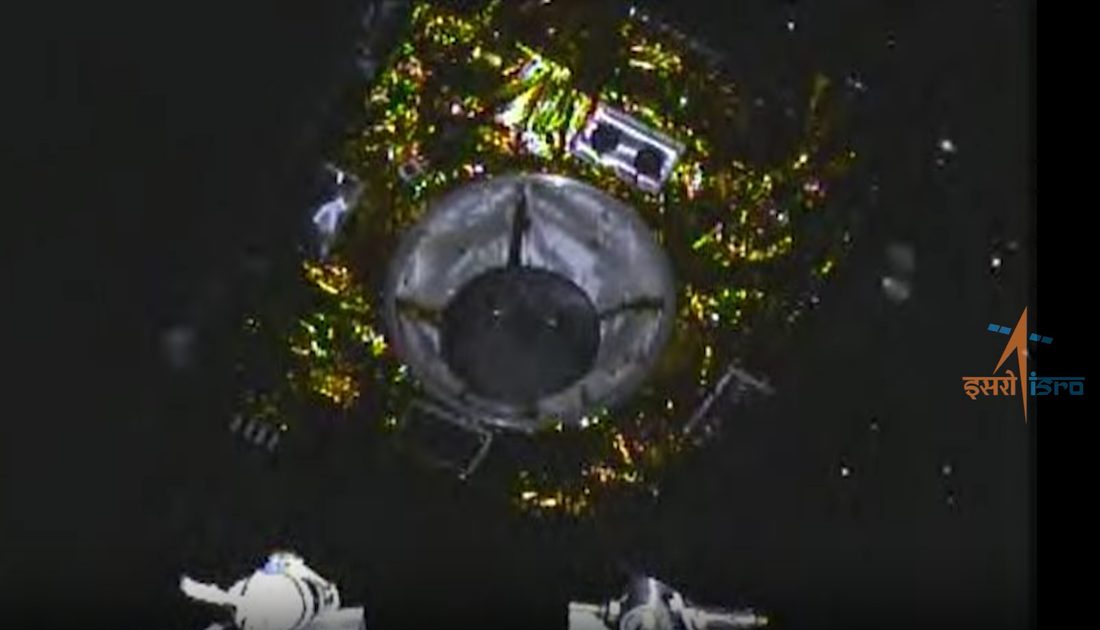
“Not working” means the satellite can no longer help with navigation, because its clocks failed, it grew too old, or it never reached the right orbit. NVS-04 and NVS-05 are planned next.
India's own clock on the ground, too
Satellites are only half the story. In June 2025, the government said India would stop depending on GPS to keep Indian Standard Time (IST). Instead, it would use atomic clocks at five labs across the country. In 2026, the government made it official: IST is now the one legal time that all offices, businesses and systems must follow.
National Physical Laboratory, New Delhi
India's master atomic clocks keep the official time.
Five regional labs
Internet and NavIC
Time travels over secure networks and, from space, through NavIC satellites.
Banks, markets, phones, power
Every payment, share trade, phone call and power switch gets the same correct time.
Why this matters to you: when you make a UPI payment, the bank's computer and the shop's computer must agree on the exact time. If their clocks disagree, records get mixed up and fraud is harder to catch. Mobile towers that fall out of step drop calls. With India's own time system, and NavIC as a backup from space, none of this depends on another country.


 Click it and Unblock the Notifications

 Sign in with Google

