


India's emerging politics of intolerance


It looks like the concept of constructive criticism is dying fast.
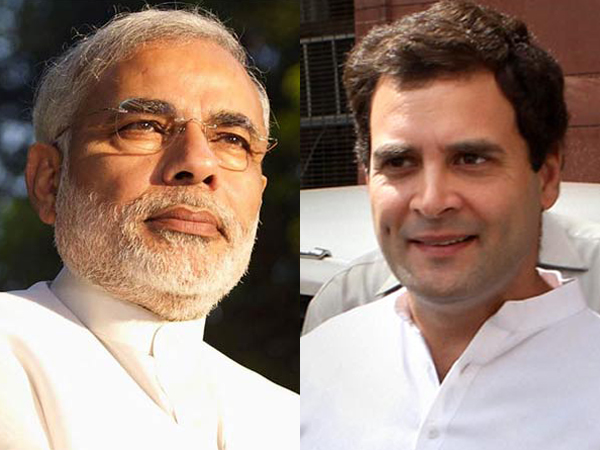
On Wednesday, Samajwadi Party leader Naresh Agarwal made an objectionable reference to the Narendra Modi's humble beginnings and said a tea-seller can't become country's Prime Minister. The moment Congress' Rahul Gandhi appears at the podium to make a speech, netizens appear on twitter and other social networking sites with their rather poor 'Pappu' jokes.
The politics in India has of late reduced to merely following a propoganda rather than ideating and criticising judiciously.
Can't a tea-seller be India's prime minister? Especially if he has the power of imagination and decision-making? (Read: Why Narendra Modi can't be a PM, explains Samajwadi Party leader) He can. And calling Modi a 'Feku' or a communalist and laughing off everything he says is like turning a blind eye towards some very important facts. He's an efficient chief minister who managed to lead Gujarat - a state which was reeling under issues like water scarcity, poor literacy and high infant mortality - in the path of economic and social development. He understands Indian politics and has the backing of decades-long experience in the field of politics.
And similarly, is it really proper to dismiss off Rahul Gandhi as someone inane, instead of making an effort to listen to what he says and see if there is something sensible in it? For instance, the ISI comment he made on Muzaffarnagar riots is not all silly. The words he used were wrong, but there are enough reasons to believe that riot-victims are often approached by agents of terrorist groups as they know it is easier to rope them into violence or 'act of vengeance'. (Read Praveen Swami's article in The Hindu)
India's young people on twitter and social networking sites are increasingly getting influenced by the propaganda preachers. Now this is a bad sign. Most of them don't understand the nuances of politics or public administration and are largely unaware of the social issues.
An anti-Modi remark on Facebook earns one a few hundred 'likes' and a 'Pappu joke' gets similar number of 'likes'. Fewer creative discussions and even fewer efforts to listen to what others say. This mass hysteria and zealous intolerance is slowly dumbing down our young generation.
And the political leaders are, by far, taking advantage of this 'syndrome'.
I seriously doubt if Sardar Patel, Nehru or any leader from that era would have approved of this mud-slinging, superficial analysis and half-baked criticisms. There are two very important lessons we should learn from them - repecting one's opponents and getting a deeper understanding of issues. That way, we can save ourselves from being mere puppets in the hands of someone else.
OneIndia News



 Click it and Unblock the Notifications
 Sign in with Google