


We must encourage more softer means for south Asian harmony


Lack of political will has left the SAARC paralysed but there is always a possibility of integrating the mutually suspicious states in south Asia through popular contacts. Instead of just the Prime Ministers/Presidents or foreign ministers or bureaucrats of south Asian countries visiting each other often, why can't we exchange people who are known for their good work in their native country to our neighbours?
If we can back Nitish Kumar to visit Pakistan, why can't a visit by Narendra Modi to that country be encouraged? Partisan politics and utterly discredited politicians hinder such possibilities and this encourage terrorist activities that flourish in the vacuum created by mutual misunderstandings between nations.
Dialogue can not be suspended according to political convenience
We must understand that the multicultural south Asian society can not be understood from a single power centre and to accommodate diversity, more democratic representation is necessary. We talk about Indo-Pak dialogues but that dialogue can not be allowed to drift with political convenience. It must be made a continuous process at the popular level.
Realpolitik demands India and Pakistan to come closer
Both India and Pakistan have bled profusely because of terrorism. World politics today has changed considerably from what it was in the Cold War period because of the global threat of terrorism and both Islamabad and New Delhi know very well that either of the two sides will suffer if they don't come closer for mutual security. There is no point in isolating each other and adopt a coercive diplomacy for it will only lead to communication gaps and allow terrorists to capitalise on the trust deficit.
South Asia will see a major change in situation once the US and west pull out of Afghanistan and neither India nor Pakistan can meet the new challenges alone then. A feeble Afghanistan and brittle Pakistan need India today and New Delhi can't ignore the situation in those countries either, all for mutual security arrangement. It is high time we build on our mutual relationship and for that, socio-economic bridge-building is key. Politics alone can't serve this purpose.
Nitish Kumar should be seen as a representative of a democratic system in Pakistan and not a politician. His sharing of experience with the Pakistanis will help their cause in administrative affairs and he can also learn a point or two from them. This is how confidence-building measures evolve. High-profile visits by head of the states are not always successful. Whether there is a threat from Bal Thackeray or not, visits by cricket teams are always a welcome move. It is foolish to equate cricket matches with 26/11 attacks but our rigid political leaders must carry on with their agenda if they have to keep themselves relevant.
Also, Pakistan can not afford to feed its people with anti-India slogans for ever. The socio-economic condition in that country has worsened but the divided and squabbling leadership is more obsessed with security and military might. Very soon, Pakistan will need India's help just as an underdeveloped state requires favour from a better-developed one.
Afghanistan and Myanmar have taken the right path, will others follow?
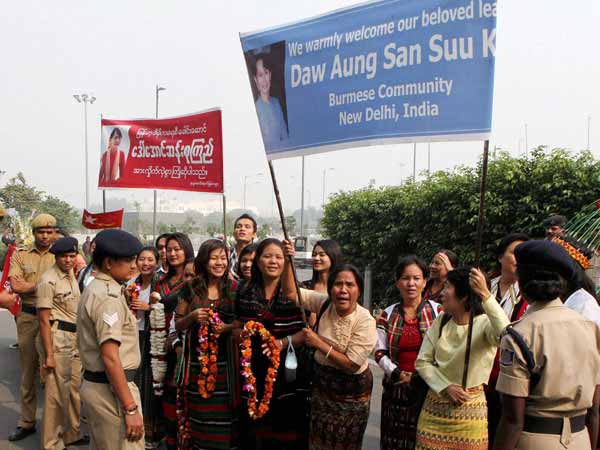
Islamabad can take a leaf out of books of Afghan President Hamid Karzai and Myanmar leader Suu Kyi, both of whom have close relations with India. Both these leaders know that India is an undeniable force in south Asia today and its relations with the USA and China are much better than what was in the past. They have not forgotten their old friend. India also has a good relation with Iran, which makes Afghanistan all the more relieved to befriend India for its other allies are turning increasingly suspicious. The process of democratisation in both Afghanistan and Myanmar will remain incomplete without India's aid.
More popular contacts needed with other south Asian states as well
The President of Sri Lanka, Mahinda Rajapaksa, is a regular visitor to India but some forces here oppose his regime for issues that belong to Sri Lanka's internal domain. Our politicians target common Sri Lankans to earn pat on their backs but such steps leave a bigger damage. Myanmar's movement towards political reforms has made it closer to India than China and an emerging Washington-New Delhi-Naypitaw axis will ensure that a better future is in store in India's east. Can Nepal, Bangladesh and Maldives learn to better the popular contacts, even for their own interests for otherwise they will also turn into hotbeds of terrorism? Bhutan has always been a trusted friend of India.
Asif Ali Zardari knows how important it is for his country to win India's confidence and the invitation to Nitish Kumar is part of his efforts to improve the relation for Islamabad is undergoing one of the most turbulent phases in its foreign policy affairs. It is high time that New Delhi also backs it up and not judge the relation with Pakistan only through anti-terror protests. The visa liberalisation programme is a positive development. Sentiments of a section will be temporarily hurt if India makes positive overtures to Pakistan but can reduce the danger in the long run. We can't afford to go on fighting for ever.



 Click it and Unblock the Notifications
 Sign in with Google