


Cinema as Resistance: Andrzej Wajda’s Legacy Remembered at Bengaluru Film Festival
The Bengaluru festival panel examined Polish cinema and Andre Vajda's influence, emphasising cultural resistance, visual storytelling, and the impact of the Polish Film School on postwar society. Experts discussed how Vajda used cinema to address political tensions and social issues, shaping national and international perceptions.


Polish cinema icon Andrzej Wajda was far more than a master filmmaker; he was a courageous cultural voice who dared to speak truth to power through his art, said Joanna Wapińska, Artistic Director of the Gdynia International Film Festival. She was speaking at a special conference titled "Polish Cinema and the Legacy of Andrzej Wajda", organised as part of the 17th Bangalore International Film Festival.
Addressing the audience, Wapińska noted that Wajda worked during a period marked by intense state censorship, when free expression was tightly controlled. Yet, instead of being silenced, he evolved a distinctive cinematic language that allowed him to communicate ideas that could not be stated openly. Through symbolism, metaphors and powerful visual imagery, Wajda conveyed complex political and emotional truths to audiences. "This is why he should be remembered not only as a filmmaker, but as a sensitive fighter who resisted oppression with intelligence and creativity," she said.
AI-generated summary, reviewed by editors

Wapińska highlighted Wajda's pioneering role in shaping the 'Polish Film School', a movement that fundamentally transformed Polish cinema. Films such as Kanal and Ashes and Diamonds marked the beginning of this new wave, which challenged the rigid framework of socialist realism promoted by the post-war Polish government. Instead of glorifying ideology, Wajda sought to connect with ordinary people, focusing on their moral dilemmas, trauma and inner struggles. His films, she said, spoke to the hearts of the public rather than catering to the expectations of the ruling regime.
A recurring theme in Wajda's work was the anguish of Poland's "lost generation"-young people who had fought and survived the war but were denied true independence in its aftermath. Their disillusionment, psychological conflict and sense of betrayal found powerful expression in his cinema. Wapińska described Man of Marble as one of his most significant works, noting that it played a crucial role in awakening popular consciousness and questioning state-controlled narratives.
Echoing these views, speaker Vidyashankar said Wajda was not merely a director but the cultural conscience of Poland. "Through visual grandeur and emotional depth, he transformed cinema into a medium of protest," he said, adding that Wajda became a key cultural symbol of civil resistance during the Solidarity movement of the 1980s.
Malgorzata Wiejis-Golebiak, Director of the Polish Institute in New Delhi, underlined the importance of the Polish film screenings in Bengaluru, calling them a form of "cultural diplomacy." "Culture is the most powerful means of communication. It enables cooperation and emotional exchange beyond borders," she said.
The event was hosted by noted film composer Mrutunjaya Ali Khan and was attended by the Honorary Ambassador of Poland in Bengaluru, Channarayapatna Rajappa Raghu.
-
 Gold Rate Today 3 April 2026: Latest IBJA Rates, Tanishq, Kalyan Jewellers, Malabar, Joyalukkas 22K Prices
 -
 Gold Rate Today 1 April 2026: Latest IBJA Gold Rates, Tanishq, Kalyan, Malabar, Joyalukkas Prices
 -
 School Assembly News Headlines Today April 03: Top National, International, Sports, Business News
 -
 India to Attend Global Summit on Hormuz Crisis Amid Rising Tensions
 -
 Iran Crisis: Over 5.98 Lakh Indians Have Returned Home, Confirms Govt
 -
 RCB Vs CSK IPL 2026 Tickets At Chinnaswamy: Official Sale, Metro Perks, And Entry Guidelines
 -
 ATM Withdrawal Rule Changes Kick In Today: HDFC, PNB, Bandhan Revise Limits, Charges, UPI Impact
 -
 Stock Market Crash: Sensex, Nifty Fall as ₹51.7 Lakh Crore Wiped Out Amid Global Tensions
 -
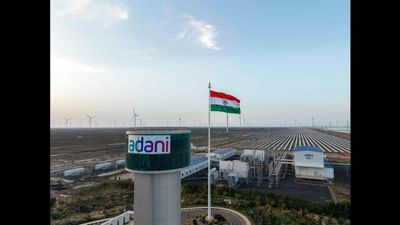 Adani Green Energy Delivers on 5 GW Commitment in FY26, Marking a Global High for Greenfield Expansion.
 -
 Gold Silver Rate Today, 2 April 2026: City-Wise Prices, MCX Tracks Sharp Rise In Gold And Silver Across India
 -
 Gold Silver Rate Today, 1 April 2026: City-Wise Prices Rise Sharply, MCX Gold And Silver Surge
 -
 Gold Silver Rate Today, 3 April 2026: City-Wise Prices, MCX Gold Down, Silver Slides Amid Global Pullback



 Click it and Unblock the Notifications
 Sign in with Google