


Law Commission favours law on passive euthanasia


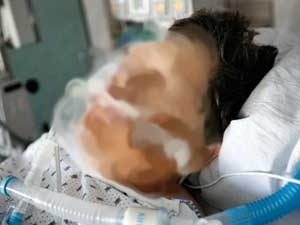
In its report on "passive euthanasia", the panel has recommended that government evolve a comprehensive law in this regard. It said a "competent" adult patient who can take an informed decision, has the right to insist that there should be no invasive medical treatment by way of artificial life sustaining measures.
The report, presented to the government in August 2012, was tabled in Parliament today. The panel, which advises government on complex legal issues, said such a decision is binding on doctors or hospital attending to such patient provided that the doctor is satisfied that the patient has taken an "informed decision based on free exercise of his or her will."
The Commission said the same rule will apply to a minor above 16 years of age who has expressed his or her wish not to have such treatment provided the consent has been given by one of the parents of such patient.
The panel said if patients cannot take a decision on their own, then the decision of the doctors or relatives to withhold or withdraw the medical treatment will not be final.
"The relatives, next friend, or the doctors concerned or hospital management shall get the clearance from the High Court for withdrawing or withholding the life sustaining treatment," it recommended. It suggested provisions for protection of medical practitioners and others who act according to the wishes of the competent patient or the order of the High Court from criminal or civil action.
"Further, a competent patient (who is terminally ill) "Further, a competent patient (who is terminally ill) refusing medical treatment shall not be deemed to be guilty of any offence under any law," the panel said.
It also said the governments will have to devise schemes for palliative care at affordable cost to terminally ill patients undergoing intractable suffering.
In 2011, the Supreme Court had put its seal of approval on passive euthanasia for 60-year-old nurse Aruna Ramachandra Shanbagh, living in a vegetative state for nearly four decades in a Mumbai hospital after a brutal sexual assault.
The apex court noted that while active euthanasia (mercy killing) was illegal, "passive euthanasia" can be permissible in exceptional circumstances.
In April 2011, the government had asked the panel to study the feasibility of framing a law for euthanasia after the SC legalised passive euthanasia and said its verdict will be the law of the land until Parliament enacted a law on the issue.
PTI



 Click it and Unblock the Notifications
 Sign in with Google