


Netanyahu Warns Iran’s New Supreme Leader Mojtaba Khamenei as Israel–US War Enters Day 13


Tensions in the Middle East continue to rise as Israeli Prime Minister Benjamin Netanyahu issued a strong warning aimed at Iran's new Supreme Leader, Ayatollah Mojtaba Khamenei.

AI-generated summary, reviewed by editors
Speaking during his first press conference since the war began, Netanyahu suggested that Iranian leadership figures could be targeted as the conflict between Israel, the United States, and Iran deepens.
The conflict has now entered its 13th day, with both sides exchanging threats while the region faces growing instability.
Netanyahu Signals Possible Action Against Iranian Leaders
During the press briefing, Netanyahu made comments that appeared to warn Iran's top leadership. When asked whether Israel would target Mojtaba Khamenei or Hezbollah chief Naim Qassem, the Israeli leader avoided giving a direct answer but hinted that no leader of groups hostile to Israel should feel safe.
He stated that he would not provide "life insurance" to leaders of organizations that Israel considers enemies. Netanyahu also said he would not reveal Israel's military plans but indicated that further actions were possible.
The statement was widely seen as a warning that Iranian leadership figures could become targets if the conflict escalates further.
Israel Claims Major Damage to Iran's Military Structure
Netanyahu said the joint U.S.-Israel military campaign had significantly weakened Iran's security forces. According to him, the Iranian government is "no longer the same" after nearly two weeks of intense airstrikes.
He claimed the attacks had severely affected two key Iranian organizations:
- The Islamic Revolutionary Guard Corps (IRGC)
- The Basij paramilitary force
These groups are central to Iran's internal security and regional military influence. Netanyahu said Israeli forces are continuing operations against these forces both in urban areas and at strategic checkpoints.
Israeli Strikes Target Iranian Nuclear Scientists
The Israeli prime minister also claimed that several top Iranian nuclear scientists had been killed during the air campaign. According to Netanyahu, these strikes were aimed at weakening Iran's nuclear program.
He also criticized Mojtaba Khamenei, calling him a leader controlled by the Revolutionary Guards and saying that he cannot appear in public freely due to security concerns.
Netanyahu insisted that Israel's military operations are progressing successfully and described the joint campaign with the United States as "going better than expected."
Israel Warns Hezbollah of Continued Attacks
Netanyahu also addressed the situation involving Hezbollah, the Iran-backed militant group based in Lebanon. He vowed that Israel would continue targeting Hezbollah positions.
Hezbollah had launched attacks on March 2 in response to Israel's earlier strike that killed Iran's former Supreme Leader Ayatollah Ali Khamenei, Mojtaba Khamenei's father.
The exchange of attacks has increased fears that the conflict could spread further across the region.
Message From Israel to the Iranian People
In a direct message to Iranian citizens, Netanyahu said that the current situation could open the door for change inside Iran.
He stated that Israel and the United States were creating conditions that might allow the Iranian people to challenge their government. According to him, the possibility of a "new path of freedom" may be approaching.
However, he added that any major political change would ultimately depend on the Iranian people themselves.
Iran Responds With Strong Warning to the United States
Meanwhile, Iran's new Supreme Leader Mojtaba Khamenei released his first public statement since taking power.
In his message, he warned that Iran would seek revenge for those killed in the conflict. He also issued a warning to the United States, stating that American military bases in the Middle East could become targets if the war continues.
Khamenei also threatened to keep the Strait of Hormuz closed as a way to increase pressure on the United States and its allies.
The strait is a crucial global oil route, with around 20 percent of the world's oil supply passing through it each day.
Rising Civilian Casualties in the Conflict
Iranian authorities claim that the ongoing airstrikes have caused heavy civilian losses. According to Tehran, nearly 10,000 civilian sites have been bombed since the war began.
Officials also say that more than 1,300 civilians have been killed during the attacks.
These claims have not been independently verified, but they highlight the growing human cost of the conflict.
A Conflict With Global Consequences
As the war between Iran, Israel, and the United States continues, the situation remains highly unpredictable. The rising tensions have already affected global markets, oil prices, and regional security.
With threats being exchanged by both sides and military operations continuing, many observers fear the conflict could expand further and destabilize the wider Middle East.
For now, the international community is closely watching developments as the crisis enters a new and uncertain phase.
-
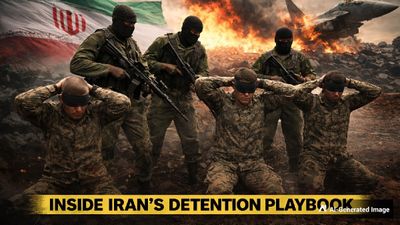 What Happened Last Time Iran Held US Personnel: The 2016 Detention That Still Haunts Washington
 -
 US Pilot Reportedly Ejects In Southwest Iran Amid Fresh Iranian Claims Of F-35, F-15E Downing
 -
 'Behind Enemy Lines' For Real: F15 US Pilot Rescue Unfolds Deep Inside Iran
 -
 ‘Habitual Liars’: PM Targets Congress and Left in Fiery Speech Over Kerala Story, Dhurandhar False Claims
 -
 Trump Addresses Nation Amid Iran War, Targets Obama Nuclear Deal, Justifies ‘Operation Epic Fury' , Watch
 -
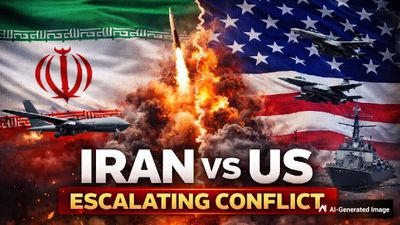 Iran Hits Back at Trump, Threatens Prolonged War
 -
 Will Donald Trump Quit NATO After Iran War Rift? Europe Unites As Alliance Faces Its Biggest Crisis In Decades
 -
 UK To Host 35-Nation Talks To Reopen Strait Of Hormuz Amid Oil Crisis
 -
 Centre Plans ₹2.5 Lakh Crore Credit Shield for Businesses Facing Iran Conflict Fallout
 -
 School Assembly News Headlines Today April 03: Top National, International, Sports, Business News
 -
 We're The Only Country To Lose Mariners At Strait of Hormuz: India At UK-led West Asia Meet On Iran Crisis
 -
 Stock Market Crashes As Sensex Falls Over 1,400 Points After Trump’s Iran War Warning, Oil Prices Surge



 Click it and Unblock the Notifications
 Sign in with Google