Get Updates
Get notified of breaking news, exclusive insights, and must-see stories!

Meenakshi Amman Temple, Madurai

Madurai, Tamil Nadu

Also Known As:

Arulmigu Meenakshi Sundareswarar Temple

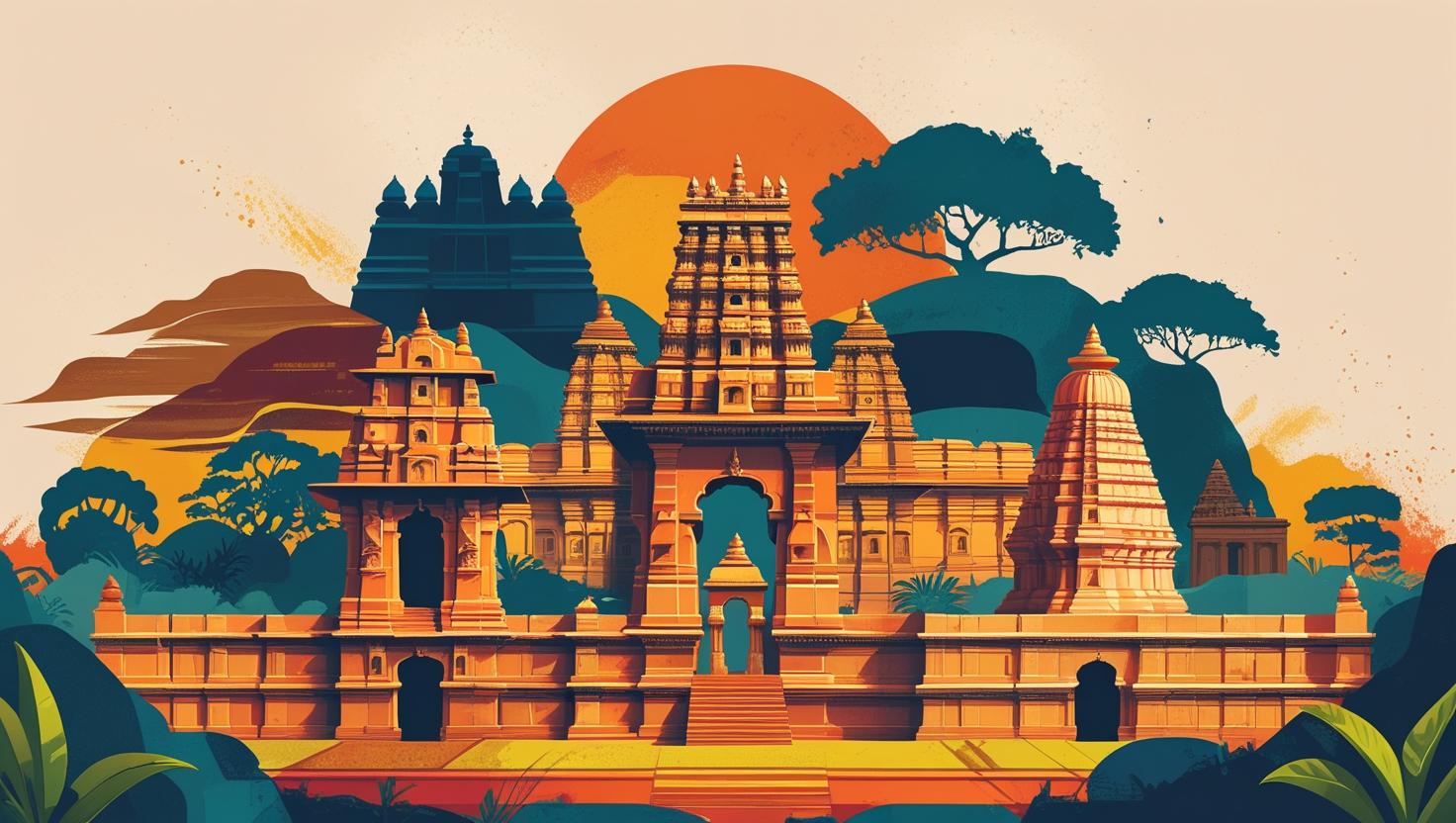
Meenakshi Amman Temple, located in Madurai, is a remarkable testament to the rich blend of cultural heritage and spiritual devotion. With a history that spans centuries, the temple has preserved its original charm while adapting to the evolving times. Its unique architecture reflects the craftsmanship of skilled artisans, while its rituals echo ancient traditions passed down through generations. Visitors are captivated by the intricate carvings, sacred idols, and the serene courtyards that invite both prayer and reflection. This temple has not only served as a centre of worship but also as a cultural hub where stories, art, and traditions thrive. For both devotees seeking divine blessings and heritage enthusiasts exploring India’s spiritual landscape, Meenakshi Amman Temple in Madurai offers a truly enriching experience. Its legacy also resonates with the grandeur of Historic temples in Tamil Nadu.
Meenakshi Amman Temple

Meenakshi Amman Temple History and Significance

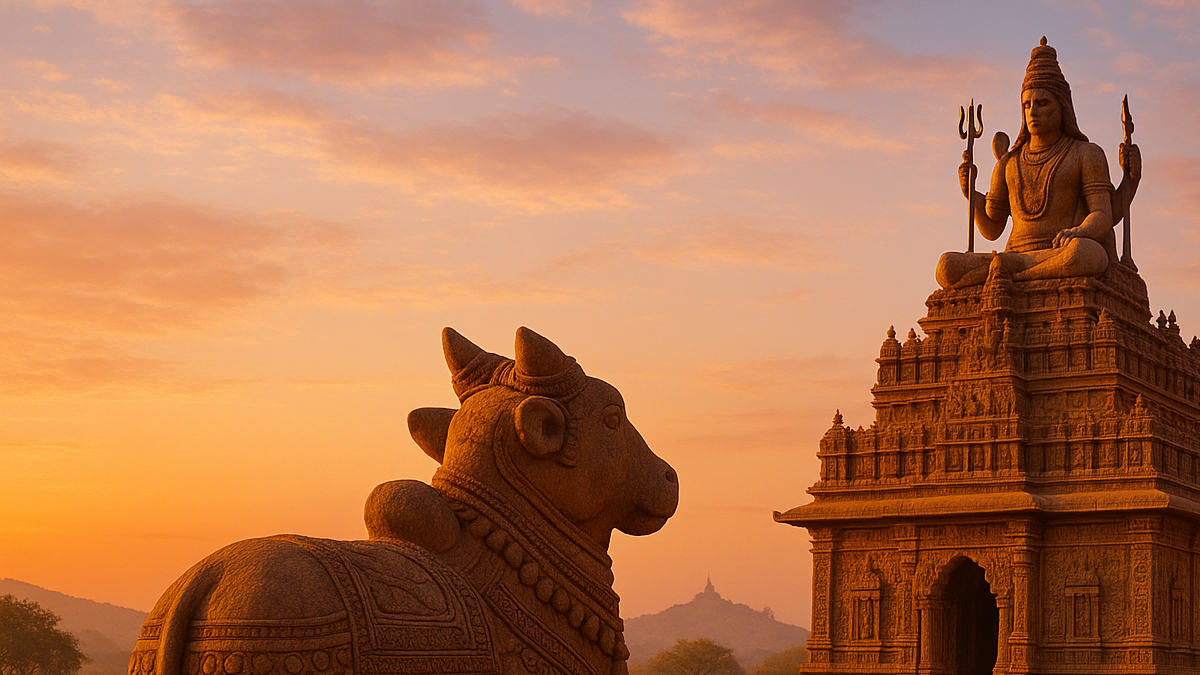
The Arulmigu Meenakshi Sundareswarar Temple, located in Madurai, Tamil Nadu, is a historic Hindu temple. It is dedicated to the goddess Meenakshi, a form of Parvati, and her consort, Sundareswarar, a form of Shiva. The temple is at the centre of the ancient temple city of Madurai, mentioned in Tamil Sangam literature.

The temple was built by the Pandya dynasty, with significant contributions from various rulers over centuries. The present structure was largely rebuilt after the 14th century CE, following destruction by the Delhi Sultanate's armies. The Vijayanagara Empire and Nayak rulers played key roles in its restoration and expansion.

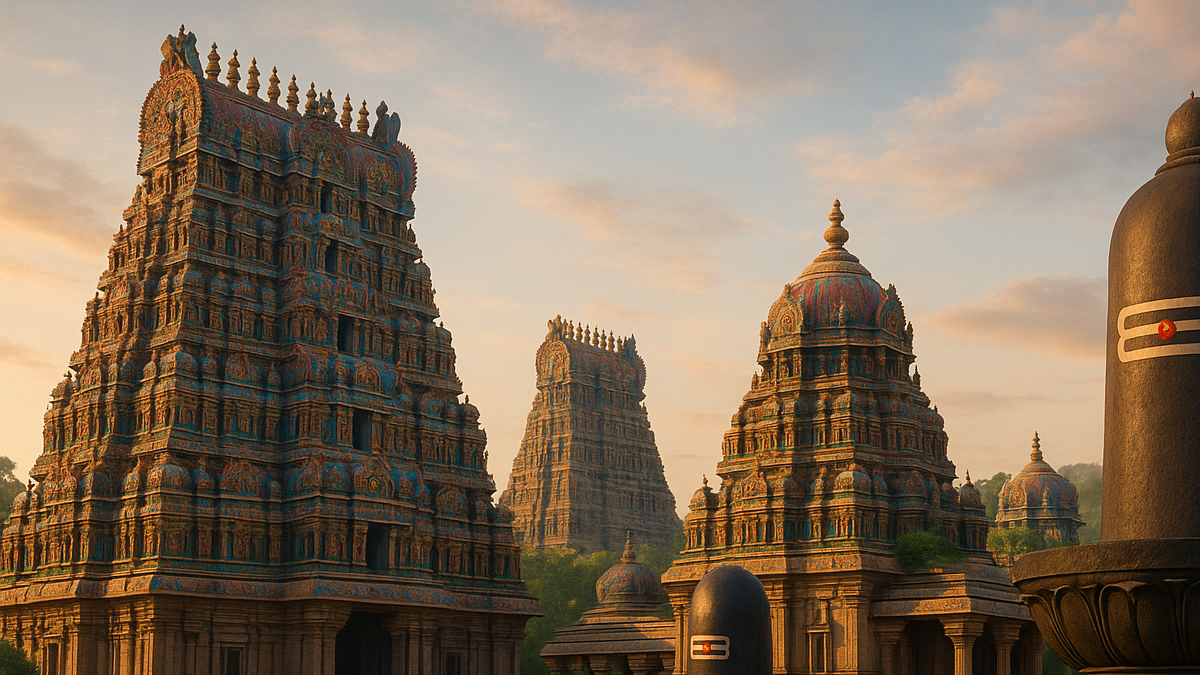
The temple complex has 14 gopurams (gateway towers), with the tallest being the southern gopura at 51.9 meters. The complex includes numerous sculpted pillared halls and shrines dedicated to various Hindu deities and scholars.

Meenakshi Amman Temple Opening Time

Day Timings
Monday 5:00 AM – 12:30 PM
4:00 PM – 10:00 PM
Tuesday 5:00 AM – 12:30 PM
4:00 PM – 10:00 PM
Wednesday 5:00 AM – 12:30 PM
4:00 PM – 10:00 PM
Thursday 5:00 AM – 12:30 PM
4:00 PM – 10:00 PM
Friday 5:00 AM – 12:30 PM
4:00 PM – 10:00 PM
Saturday 5:00 AM – 12:30 PM
4:00 PM – 10:00 PM
Sunday 5:00 AM – 12:30 PM
4:00 PM – 10:00 PM

Meenakshi Amman Temple Pooja Timing

Pooja Name Timings
Thiruvanandal pooja (mahasodasi) 05:30 AM to 05:45 AM IST
Vilaa pooja (paalai) 06:30 AM to 07:15 AM IST
Kalasandhi pooja (Gowri) 10:30 AM to 11:20 AM IST
Maalai pooja (panjathasi) 04:30 PM to 05:15 PM IST
Ardhajama Pooja (madhangi) 07:30 PM to 08:15 PM IST
Palliyarai Pooja (sodasi) 09:30 PM to 10:00 PM IST

Meenakshi Amman Temple Location Details

Meenakshi Amman Temple is located in Madurai, Madurai, Tamil Nadu. The temple is well connected by road, rail, and air, making it easily accessible for devotees and tourists. Below are the location details.
Address
Chithirai Street, 625001
04522344360

How to Reach Meenakshi Amman Temple

  • By Road:

  • Madurai is well-connected by road to major towns in Tamil Nadu. State Transport Buses and private taxis operate regularly from cities like Chennai, Coimbatore, and Trichy.

  • By Train:

  • Nearest railway stations: Madurai Junction. From this station, buses or taxis are available to reach the temple directly.

  • By Air:

  • Nearest airport: Madurai Airport. From the airport, you can take a taxi or bus to Madurai city, where the temple is located.

Meenakshi Amman Temple Visitor Information & Tips

Best time to visit (season/months):

The best time to visit is between October and March when the weather is pleasant and ideal for sightseeing. Avoid visiting during the peak summer months (April to June) due to high temperatures.


Temple Facility

Vehicle Parking:
First and foremost point to borne in mind is, no vehicular traffic is allowed around 400 meters circumference of this temple and hence visitors have to park their vehicle outside that area and to reach the temple by walk only. It is inevitable for every one to know about the parking places. Vehicle parking amenity is provided to the Devotees who throng this temple at Ellis Nagar which is located 500meters away from periyar bus stand. Drinking water, separates toilets and bathrooms for men and women and kitchen facilities are available at this parking space. The fee structure as follows Type of Vehicle Parking Fee (in Rs.) Bus/Mini bus 200/- Van 70/- Car/Auto 50/- Besides there are two more vehicle parking spaces arranged for the devotees. They are 1. Parking space located in Anupanadi parking space near Thappakulam. 2. Ezhukadal street shopping complex. Fee structure maintained at Anupanadi Vehicle parking space Type of Vehicle Parking Fee (in Rs.) Bus/Mini bus 100/- Van 30/- Car/Auto 20/- Fee structure maintained at Ezhukadal street shopping complex parking space Type of Vehicle Parking Fee (in Rs.) Two wheeler 10/- Bi cycle 5/-
Cloak Room:
Besides providing free amenity of safe keeping of luggage, services such as cloak room facility to keep the belongings of the devotees safely, safe keeping of mobile phones are available to the devotees on payment at all the entrance points located beneath the towers. Baggage scanners are also installed at all the entrance points to ensure the safety and security of the devotees. For luggage fee-Rs.2/-(per luggage) For Mobile safety keeping fee-Rs.5/-(per mobile)
Wheel Chair:
24 wheelchairs are available in the temple for the use of differently abled and elderly people. These are placed at the junction of Thirukoil South and West Audi street.
Library Facility:
Object of establishing temples is not only confined with worshipping but also to profess and disseminate the spiritualism, and hence it becomes inevitable for any temple to have a free of charge library in this sense. This temple too has a library which contains nearly 1750 chronicles in various heads. This library is located in the south aadi veedhi, inside the temple precinct.
Free Footwear Stand:
To protect the footwear of the devotees visiting the temple, free footwear stands have been set up at all the entrances of the temple.
Golden Chariot:
The pilgrims have to pay a service fee of Rs.1501 for the golden car urchavam.Only five persons are allowed per registration on payment of Rs.1501/-.The gold chariot will take place on days when there is no festival at the Aadiveethi complex after 7.00 pm. On the first day of every Tamil month, there will be a golden chariot on behalf of the temple devotees may participate in the without paying charges.
Thulabharam Facility:
Offering of things at par with one&amprsquos mass which is known as &ampldquoThulabaram&amprdquo in Tamil is in vogue at this temple. Devotees can offer rice, sugar, fruits, coins or the things they wish in this scheme. The fee for this service is Rs.5/- only.The place for offering Thulabaram is there at the northern side bank of Potramarai Tank.
Accommodation Facility:
To enable pilgrims from outside and the travellers to stay, Two bed rooms(5rooms) at Rs.200/-and Three bedded rooms(7rooms) at Rs.300/- and air conditioned rooms (4rooms)at Rs.500/-are available at Birla Vishram travellers lodge on behalf of the temple situated near the entrance of the West Gopuram and near by periyar bus stand In the Elis nagar pilgrims lodge Four bed rooms(4rooms) at Rs.900/- Two bed rooms(3rooms) at Rs.300/- and also dormitory hall for 50 members are also available. Devotees who throng this temple from faraway places are facilitated with boarding and lodging amenities by this temple management. There are two stay homes available, one at west chithirai veedhi near the temple and another one is at Ellis nagar which is 2 KM away from the temple. There are 5 two bedded rooms, 7 three bedded rooms and 4 air conditioned rooms available for the pilgrims service at the Birla Vishram lodge located in the west chithirai veedhi near the temple. Rs.200/- is charged to avail stay in the 2 bedded rooms, Rs.300/- is charged to avail stay in the 3 bedded rooms and Rs.500/- to avail stay in the air conditioned rooms in a single day. It is collected Rs.900/- for 4 bedded room in the Ellis Nagar lodge and Rs.300/- towards 2 bedded rooms. There are 4 four bedded rooms, 3 two bedded rooms and a dormitory hall to accommodate 50 persons available in the Ellis Nagar pilgrims lodge located near the Periyar Bus stand. Rs.900/- is collected as rent to avail four bedded rooms and Rs.300/- is collected as rent to avail 3 bedded rooms for a single day. Rs.3750/- is collected to accommodate 50 persons in the dormitory hall. Dormitory service may not be availed by an individual rather a group of 50 persons only may avail this facility.
First Aid Medical Centre:
In order to offer first aid to the devotees who fell ill suddenly during their visit, a clinic is established which is equipped with a physician, nursing assistant and multipurpose worker. First aid is provided to the affected devotees to save them from the imminent danger and they will be sent to the government medical college hospital for further treatment. The clinic is located in the Birla Vishram lodge buildings in the west chithirai street, opposite to western tower of the temple.
Karunai Illam:
As a contribution to the social defence, an orphanage namely Karunai illam for girl students, who lost their parents or in an indigent condition, has been run by this temple since the year 1997. As many as 34 girl children are accommodated there at present. Boarding, lodging,dress materials, Medical amenities, books and other allied educational materials are provided to the inmates at free of cost by this temple. The inmates or pursuing their school education at the Arulmigu Meenakshi Sundareswarar Girls Higher Secondary School. A benevolent scheme to spare 50 of education fee of collegiate education to the inmates those who pursue their education further from the temple funds is in vogue. As a face lift measure, a new building had constructed with necessary amenities to accommodate the inmates. It will not be an exaggeration, to claim that this is a boon for the socially neglected Girl children.
Drinking Water R.O.:
Drinking water purified using Reverse Osmosis technology is available to quench the thirst of the devotees, for which Reverse Osmosis water purification plants are installed at 9 different locations inside the precinct of the temple, 5 plants out of 10 are installed at the entrance points beneath the towers.
Battery Car:
Free E-buggy (Battery car) services are available in this temple for the disabled and senior citizens to carry them along the Aadi Veedhis (Outer precincts). Mr. Arunachalam, Assistant security officer of this temple maybe contacted @ 91 99965 18993 to make use of this amenity.

Meenakshi Amman Temple Information Facilities and Accommodation

Temple Speciality
Thirumana Sthalam:
The temple attracts over a million pilgrims and visitors during the annual 10-day Meenakshi Tirukalyanam festival, celebrated with much festivities, fervour and a ratha (chariot) procession during the Tamil month of Chittirai (overlaps with April-May in Georgian calendar, Chaitra in North India).
Holly Tank:
It is believed that one who sprinkles the waters of the pond of Golden Lotus on Amavasya (new moon) day, the first day of the month, days of eclipse and other auspicious days and worship the Lord, they will be blessed with all their aspirations for success.
Subshrines Details
Arulmigu Sangatthar Temple:
Quite an important shrine in the Madurai temple and one of oldest also is the Sangatthar temple situated in the north-west comer of the Swami Sannidhi second prakaram. The images of the Sangam poets are in this shrine. The temple has many interesting architectural features. The shrine face south and is approached by a flight of steps leads to the sanctum doorway. The doorway is flanked by a gopuram pillar on either side of it. Going into the temple one finds a small platform running round the four walls, with images of the Sangam poets arranged along the top. The platform seems to be a late addition and one does not known what the original temple was intended to house. Taking all its architectural characteristics into consideration there should be no difficulty in believing that the shrine must be a pandya construction between the 12th and 13th century, especially as it represents the transitional stage from the niche with thoranam to the niche with pavilion, both of which types are found on the walls of this temple. It is also curious that this early shrine is not mentioned either in the Thiurppani Vivaram or Thiruppanimalai or in the later Srithalam. So the Sangatthar images might have been put in at a later date form which time it has come to be known as the Sangattar temple. It is not clear to which deity, if any, the temple must have been originally dedicated.
Arulmigu Kashiviswanathar Shrine:
As one enters through the south gopuram and turns left one comes upon what is known as the Vighneswarar Mandapam adjoining the wall at the south-east corner of the Javandiswarar garden. An examination of this mandapam reveals many interesting features. This small mandapam now houses a vighneswarar image with a few Naga images. The Vighneswarar image is placed on an upturned capital with idal taken from some broken bulbous capital pillar. It looks as though these images have been just collected from similar stray figures in the temple and placed in recent years here. Just at the back of the wall of this Vighneswarar mandapam is the Kashiviswanathar shrine in the south east corner of the garden. Entrance to this shrine is from the west colonnade of the Golden Lily Tank. The entrance is on a platform. Going into, the shrine one finds four cubical pillars of an earlier type with corbels of the 14th century. The exterior of this shrine as seen from the garden reveals other early features. This medley of early and modern features presents one with a guessing game as to how the original was like or what purpose it served. The eastern wall of the Swami first prakaram presents a similar puzzle. This has a number of shrines erected in front of the wall but a look inside a few of them reveals remnants of early type pilasters and niche pilasters. As the wall on which these are found is an old one and as it has a mediaeval pandya inscription of the 12th &ampndash 13th century the presence of these pilasters points to the existence of some early features here. However, they have been destroyed and their trace except for these pilasters is now lost.
Iswarams:
The Swami Sannidhi second prakaram on the west side contains a number of small shrines called Iswarams, all ranged in a row close to the wall on either side of the palakai Gopuram. There are 14 such shrines, six on the southern half and eight on the northern half of the prakaram. Each of these shrines has a garbhagriham and a chamber in front corresponding probably to an ardhamandapam. There is a lingam in most of them. Between the front fa&ampccedilade of each shrine a wall has been raised, perhaps at a later date, for security purposes. The shrines therefore must have been free standing originally. One of the shrines (No.8) faces south while all the rest face east. All the shrines are on a platform running the length of the wall. There is a row of cubical pillars with bevel and tenon corbel, along the edge of the platform. The shrines on the southern half are set back to the wall of the palakai Gopuram leaving a passage between the pillars of the platform and the front of the shrines them selves. But the Iswarams on the northern side of the prakaram wall have their entrance flush with the edge of the platform and there is a wide space between their back walls and. The wall of the Palakai Gopuram on that side. Many of the shrines now have only a flat roof but a few of them appear to have once had a vimanam over them. It is quite likely that the roofs of many of them were damaged some time or other and that new ceilings were put up subsequently. At present shrines Nos.7, 8 and 12 have vimanam. The vimanam over shrine No.8 is of an unusual shape. The other two vimanams are in a very dilapidated condition. The fourth shrine and the twelfth shrine appear to be older than the rest judging from the architectural features. But it is not known when these shrines were actually built or by whom. In a general way one may say that some of them, especially shrines Nos. 4 and 12, may go back to as early as the 13th and 14th centuries. The others way not be far later. Though one may find a pushpa bodigai or a kapota with later kudus on some of them. The Thiruppanimalai mentions a number of persons as having constructed several Iswarams. It is not known whether these refer to the construction of the Iswarams on the west side. But it is curious that the number of Iswarams mentioned in the Thiruppanimalai tallies more or less with those on the western corridor if one leaves out shrine Nos.4 and 12which, as stated above, appear to be older. But apart from this none of the names mentioned in the Thiruppanimalai could be identified with any of the Ivarams. According to this source the Isvarams would appear to have been built in the latter half of the 16th century. This date mayappear to be rather late if one considers the architectural features. As it is evident that quite a lot of restoration and renovation work has been done, it may be that it is this restoration work that the Thiruppanimalai might have added the chamber of ardhamandapam in front of the garbhagriham of the Iswarams. The question, however, should remains an open one for the present. Shrines No.7 facing east and No.8 facing south abut each other at the comers and have a smaller mandapam common to both, in front of them. As both these shrines have vimanams also, it may perhaps indicate that the shrines were of some importance either intrinsically or because they might have been buit by a royal personage. Similarly shrine No.12 has a vimanam and in place of mandapam has cauri bearers on the corridor pillars in front of it. This may indicate that it is also of some importance.
Arulmigu Sundareswarar Sannathi:
The sanctum of the sundareswarar shrine is a square structure. The exterior walls measuring 33ft, on all four sides. The base has a upa pidham and an adhisthanam. On the south, west and north sides of the walls of the garbhagriham are three bays or shrines which project six feet from the wall surface. The bays are 8` 6` each in length. The shrine in the south is dedicated to Daksinamurthi, that on the west has Lingodbhavar while the one on the north has Durgai. In front of these shrines is a modern platform to which a ladder gives access.
Arulmigu Meenakshi Amman shanathi:
The meenakshi shrine and its prakarams are smaller than those of the sundareswarar shrine.The sanctum sanctorium(garbhagiragam)of the sanctum is almost a square measuring about 25 feet each side with the ardhamandapam on its front. It measures about 25 feet by 45. The sanctum sanctorium(garbhagiragam) entrance has a gajalakshmi panel on its beam under a thoranam.On either side of the entrance there seem to be two wall niches with out opening but a modern brick wall and wooden shutters hide the wall surface here.The ardhamandapam has a plain interior and there are no pillars in it.
Arulmigu Kalyana Sundharar Temple:
This shrine which is to the north of the Swami Sannidhi second Prakaram on the northern side has at present the idols of Vishnu, Siva and Meenakshi in the form of Wedding procession Thirukkalyanam. This shrine was newly constructed on the year of 1985. The old Kariya Perumal Temple was in decline. The shrine which faces east has a beautiful five-aisled mandapam in front running to a length of nearly 80 feet. The sanctum presents again a rather curious mixture of types. This is an enclosed apartment with walls on all four sides, the front wall occupying the width of the central nave and two sides aisles. Thus the two end aisles form a sort of corridor or pradaksinam round the central shrine.The corridors are illuminated by clerestory windows on the roof. The central shrine could be entered through the front entrance on the east side or from the opening on the south side. A short flight of steps leads to the platform.
Temple Services
Donation:
Arulmigu Meenakshi Sundereswarar Temple is inolved in many valuable services likeArulmigu Swami & Meenakshi amman abhishekam,Ubaya ThiruKalyanam,Ubaya ThangaRatham,Arulmigu Sidthar pushpa koodaram,ArulmiguDurgai Abhishekam,Arulmigu Saraswathy Abhishekam,Arulmigu Mahalakshmi Abhishekam,Arulmigu Pathra Kali Abhishekam,Arulmigu Ahora Veerabhadhrar Abhishekam,Arulmigu Mukkurini Vinayakar Abhishekam,Arulmigu Dhakshina Moorthi Abhishekam,Arulmigu Mahalakshmi Sandal Paste Decoration,Arulmigu Dhakshinamoorthy Sandal Paste Decoration,Arulmigu Pathrakali Sandal Paste Decoration.
Annadhanam:
An innovative initiative of the Honourable Chief Minister, Thirukoil Annadhanam Scheme, which feeds the devotees who throng this temple, during the mid-day has been in vogue in this temple since the year 2002. Initially, 200 devotees per day had benefited from the year 2002, subsequently the number had increased to 300 in the year 2017 and once again the number was increased to 500 in the year 2018 and now 700 devotees are being fed daily from the year 2020. It costs Rs.35/- to feed a person a day and a cumulative of Rs.24,500/- is fixed to feed 700 devotees a day at present. Anyone who wishes to donate food for 700 devotees in a particular day may pay Rs.24,500/- in the temple and 700 devotees would be supplied with meal as per his wish by the temple. The meal comprises traditional South Indian dishes such as boiled rice, sambar, kootu, poriyal, rasam, buttermilk, waffles and pickles. A sweet culinary called Paayasam would be added on Wednesday, Friday and Sunday. The food is prepared in the kitchen located inside the temple in a Hygienic manner and food is served in a hall where 140 devotees can eat at once. Now the scheme is expanded in a way to provide food to the devotees all along the day starting from 8 A.M. in the morning to 8 P.M. in the night as per the announcement made by the Honourable Minister on the floor of the Legislative Assembly. Honourable Chief Minister of Tamilnadu inaugurated the expanded scheme on 31.12.2022 A state of art kitchen with amenities such as modern boilers and freezer chamber are used to make this endeavour success. Anyone who wishes to take part in this scheme may donate Rs.28,00,000/-, which would be deposited as Fixed deposit and from the interest accrued out of this investment would be expended to feed 4000 devotees in a particular day earmarked by the donor every year. Anyone wishes to take part in the scheme in a single day may donate Rs.1,40,000/- to feed 4000 devotees a day. Donations may be sent to the administrator of the annadhanam scheme fund (Deputy Commissioner / Executive Officer) Arulmigu Meenakshi Sundareswarar Temple by drawing Cheque or Demand Draft. Donations made by devotees to this annadhana scheme are subject to income under Section 80(g) of the Income Tax Act 1961 as per Order No.C.No.464/200/2010-11/CIT-I, dated 07.07.2011 of the Commissioner of Income Tax Office. There is tax exemption. Permanent Account No.AAAJA0359A for the same.
Tank Information
VANDIYUR ARULMIGU MARIYAMMAN THIRUKOIL THEPPAKULAM:
Vandiyur Mariamman Teppakulam is a temple tank located near to Vandiyur Mariamman Temple and situated at a distance of about 5 km from the Meenakshi Amman Temple. Literally, Teppakulam means temple pond mainly used for devotional festivals. The tank is connected to Vaigai River through an ingenious system of underground Channels. It has total of 12 long stairs (steps) made of granite on all four sides. The temple as well as the stairs was built by the King Thirumalai Nayak. In the centre of the tank there is a Madapam called Maiya Mandapam (Central Mandapam) with Vinayakar temple and garden. This is the location where the king Thirumalai Naicker excavated the soil to fabricate the bricks required for constructing his palace, Thirumalai Nayakkar Mahal. The pit that was thus formed is seen as tank now. It is approximately 305 m long and 290 m wide, nearly equal area to that of Meenakshi Amman Temple. Built in 1645 A.D.,this is the biggest tank in Tamil Nadu. 7 foot tall Mukuruny Vinayakar idol in Meenakshi Amman Temple is believed to be found during excavation process of this pond. Mariamman Teppakulam is famous for the celebrations of the Float festival, which is celebrated in the Tamil month of Thai. The celebrations take place on a full moon night (Thaipusam) and the pristine water turns colourful as the temple is lit. The idols of Goddess Meenakshi and her consort Lord Sundareshwarar, the deities of the Meenakshi Amman Temple come down to the tank in colorful floats, presenting a mesmerizing sight. Pilgrims across India come to Madurai to participate in the festival.
Golden lotus tank:
It was in this pond that the Golden Lotus for Indra to perform his pooja bloomed. This pond is also known as Adhi Theertham, Sivaganga and Uthama Theertham. This pond is situated within the temple complex. This theertham was by Lord Sivaperuman by thrusting his Soolam (three ptonged spear) into the earth in deference to the plea of Nandhi Devar and other deities. It was here, that the plank of Sangam appeared and established greatness of the moral text called Thirukkural. It was here that Chockalingam was found by the grace of the Lord, by the first Guru of Dharmapura Adheenam and Saint Srilasri Guru Gnanasambandar. In keeping with the boons granted by the Lord to a stork, upto this date no fish nor other life is found in this miraculous sacred pond. Since this theertam was before all other theerthams it is called Adhi Theertham and because it is much greater importance than all other theerthams, it is also called Parama Theertham as Gnana Theertham because it confers prosperity on all who bathe in it. As it grants heavenly abode it is also called Mukthi Theertham and as Sivaganga because the water from Ganga from the head of Lord Siva confluences with it and as Uthama Theertham because of its purity than any other theertham..
Sculpture Details
Iruttu Mandapam (Pitchatanar):
Entering through the Chitra Gopuram is the Dark Hall. It was built in AD 1613 by the kadanthai Mudaliyar. Hence it is also called Mudalipillai Mandapam after him. During the restoration work in AD 1960-63, its northern wall was demolished and windows were constructed. Till then this mandapam was dark so it was known as dark hall. Sculptures depicting the story of Pitchadan are housed here. Also four yalis and two rishis are placed on one pillar with a spoon of Rishipathini begging Lord Shiva and on the opposite pillar the sculpture of Mohini and next to it the image of Pitchadanar. The rishis are shown nearby mesmerized by Mohinis beauty. Apart from these, Nardhana Ganapati, Subramanyar sculptures and the sculpture of kadanthai Mudaliar who built the mandapam are placed in this mandapam.
PUDHUMANDAPAM (THADATHAGAI PRATIYAR):
One of the most publicized edifices in the Madurai. Temple is the pudu mandapm built by Thirumalai Nayakar between 1626 and 1633 AD. This is a large corridor measuring 34,650 square feet and is axially in front of the cost gopuram. Along length of it is a central nave with an aisle on either side of it provided by four rows of pillars. The Mandapam belongs to the Madurai period of architecture and has all the four styles of pillars, the decorative compound type, the yali type, the iconographic type and the portrait type pillars. The whole mandapam is the high watermark of medieval building craft. At the western end, that is at the end next to the east gopuram there is a platform with a canopy supported by a number of polished black stone pillars. This canopied mandapam is known as the Vasantha Mandapam to which the images of meenakshi and Sundareswarar are brought on certain festival occasions. Ten statues of nayaka rulers of Madurai from Viswanathar to Thirumalai Nayakar are on five pillars on either side in the centre of the nave. Equestrian and yali pillars are on the outer pillars at the entrance on the east and west side. These areas also have many pillars with iconographic figures. The whole corridor is an imposing structure revealing very good planning and excellent execution.
Kambathadi Mandabam sculpture- Jalandhara Vadha Murthi:
Kambathadi Mandabam sculpture Indra, the king of Devas, also known as Devendra, once went to Mount Kailash to worship Shiva. But Shiva stood in a different form. Devendra asked him who he was, but there was no reply. Devendra angrily threw his vajraayutha on Him, but it was broken to pieces. Shiva became a Rudra and from his sweat came out a child.
KILIKOONDU MANDAPAM:
Adjoining the Unjal Mandapam is the largest Kilikootu Mandapam which derives its name from the fact that Parrots are reared here in a cage. The shriners of Siddhi Vinayagar (Sthala Vinayagar) and Kumarar are to be found in this Mandapam. On the 28 pillars of this Hall are to be seen carved figures including those of the Pandavas their wife Draupadi, Vali and Sugrivan. Above the pillars on the walls are carvings depicting the 64 Thiruvilayadals. Though these carvings are small they have been delicatedly and exquisitely finished. On the ceiling are paintings of various deities. Facing the Amman Sannidhi is the beautiful painted scene of Meenakshirsquos Wedding. During (1960 ndash 63) renovation all these Paintings have been redone in oil colours. This Mandapam was built by Abishekha Pandaram in 1623. Some of the pillars are said to have been brought from the Kariamanikka Perumal Temple when the latter was destroyed.
Kambathadi Mandabam sculpture - Kaalasamhaara Murthi:
Kambathadi Mandabam sculpture Kaalari is the vanquisher of Death - Kaala samhaaramurthi. The defeat of Death by Lord Shiva is celebrated in a touching legend and given powerful form in this aspect of Shiva. The legend tells us about a sonless sage Mrikandu, to whom Shiva in answer to his prayer. offered the choice of a large number of useless sons or only one son, a singularly gifted child, who would be doomed to die at the age of sixteen. The sage asked for one remarkable son and Maarkandeya was born and fulfilled every expectation. When the boy learnt of his fate, he went on a pilgrimage as he worshipped the Linga at Thirukkadayur temple Kaala-Yama (God of Death) appeared and was about to bind him with his noose when shiva in anger, burst out of the Linga and punished Yama almost destroying him. Yama was chastened and hence went away leaving Maarkandaya without taking his life. Shiva blessed Maarkandaya to remain forever a youth of sixteen years. In this pillar Shiva in his back right hand holds the axe. Right leg of Shiva is placed on the neck of Yama. Maarkandaya clinging to the Lingam is sculptured on the adjoining face.
Kambathadi Mandapam:
The Kambatthadi mandapam is famous for depicting all the 25 forms of lord shiva. Being situated just in front of the main sanctum and containing as it does the Nandhi mandapam and the dwajasthambams, it has all its sculptures relating only to shiva forms. Going round the pillars one can notice the pillar on the left, the well known Meenakshi Sundareswarar marriage group. The sculpturing, though done as late as 1870, is a magnificent piece of hindu craftsmanship and is in some ways better than a similar sculpture in the pudhu mandapam which of course, must have been dong during Thirumalai Nayakar days. This scene shows Shive standing on the right with His right hand just holding Meenakshi right hand while Vishnu giving away His sister, ceremoniously shown by the way of pouring water as part of the Kanniga dhanam, out of a pot Behind the wedding group is sculptured a beautiful decorative tree. This is perhaps the karpaga Vriksham presented to Meenakshi by Indra during Her digvijayam. The expression on the three principal deities to the happy is most beautifully rendered and one must note especially the shy face of Meenakshi which has yet an expressive smile. This picture of the celestial wedding finds its place in almost all the wedding functions of Tamil Nadu Hindu family marriages through invitations,marriage hall decoration and etc
Kambathadi Mandabam sculpture - Kalyana sundareswarar:
Kambathadi Mandabam sculpture This is probably the most extravagant sculpture of its kind that depicts the Hindu wedding ritual in a very descriptive manner. Nowhere can such a sculpture be found that involves the celestial ritual. Shiva is an eternal Bridegroom and Sakthi is the eternal Bride. In every Shiva temple Shivas wedding is celebrated annually to show that Shiva weds Uma to bless the universe. The wedding of Shiva and uma was needed for the birth of Kumara to destroy the demons. Shiva and Sakthi are depicted as immortal lovers. Their wedding is the of truth (Shiva) and wisdom (Sakthi) as a result of which Ananda (Skanda) is born. Lord Shiva is known as Kalyana Sundara Moorthy with the wedding of Uma. This form is the model for the human race to follow and to lead a life of piety and bliss.
Meenakshi Nayakar Mandapam:
After the Ashta Sakthi Mandapam comes a huge Hall 160*110 feet. There are 110 stone pillars in the Hall, each 22 feet in height, with the figure of the yail on the capital and delicate carving below. The large statues, including that of the builder, commonly found in the building of the Nayakkar is absent in this Hall, known as the Meenakshi Nayakkar Mandapam. some of the carved are unfinished. Connecting the Ashta Sakthi Mandapam and the Meenakshi Nayakkar Mandapam is a smaller Mandapam. On the southern side of this Hall is the figure of Parvathi with a trident and a five headed serpant above. Some people say that depicts a huntress. This is likely as also a story in the Thiruvilayadal Puranam according to which Siva and Parvathi in the guise of a hunter and huntree stationed themselves at the entrance to the temple to give salvation to a person who had committed many grave sins. These figured signify that their is always salvation for those who repent for their sins and enter the temple to worship the Lord. Formerly on either side of the 20 feet passage, the temple elephants, camels and bulls were tied. At present there are shops selling flowers, toys, bangles etc., At the Western end of this 30 feet hall, is a 25 feet high brass Thiruvatchi with 1008 lamps. The Hall was built by Sanmugam Meenakshi Nayakkar, a minister of Vijayaranga Chokkanathar, in 1707. The brass Thiruvatchi was installed by Maruthu Pandiar, and the lamps are maintained and lit by the Sivagangai Devasthanam. During the (1960-63) Renovation the beauty of the Hall has been enhanced by cleaning of the pillars and addition of kmany fine paintings.
Nandhi Mandapam:
This mandapam is located directly opposite the Swami sanctum between the sculptures of the Mandapathoon under the pillar. This Nandi Mandapam is carved with great artistic skill. Above its canopy there are narrative sculptures . In AD 1564, Krishnaveerappa Nayak built this hall. In the middle of this hall there is a flagpole and a sacrificial pedestal. This mandapam is called the four-quarter mandapam and Veerappa Mandapam because it was built by Krishna Veerappa Nayak. In 1877 AD, when the class of Nagarats undertook the temple restoration work, it is known that they renovated this hall and erected new pillars around the Nandi hall and designed the forms of Lord Shiva in it that attract the eye and attention. Lord Shiva has 64 excellent forms. Among them are 25 of the best forms. The 25 forms of Lord Shiva are explained in books like Shivaparakramam, Shivamaagapuranam, Ilingapuranam etc.
Kambathadi Mandabam sculpture- Kiratarjuna Paasupadamurthi:
Kambathadi Mandabam sculpture Kiratarjunamurthi is a form of Shiva, in which he supposed to have appeared before Arjuna, who was doing penance to obtain a powerful weapon, pasupatastra, from Siva to destroy his enemies, the Gowravas in the Kuruchetra War.
Kambathadi Mandabam sculpture - Nandhi:
Kambathadi Mandabam sculpture The splashing water poured on Nandhi by a priest highlights the belief that it cleanses ones soul. Nandhi mandabam surrounded by Shiva manifestations was built by Krishna Veerappa Nayakar during 1564 A.D.
UNJAL MADAPAM:
Passing along the eastern and southern corridors of the Potramarai Kulam, one enters the Unjal Mandapam. On the enters western side of the Mandapam is a platform of black Marble where gold images of Meenakshi and Chokkanathar are placed in Unjal on Fridays. In this hall are depicted the Six Padai Veedusrdquo of Lord Murugar. The Paintings in this hall were completely renewed during the (1960-63) renovation. The Eastern Portion of this Mandapam cuts across the western corridor and projects over the steps to the Potramarai Kulam. In this portion are to be seen paintings dating back to the days of Queen Mangammal and also figures of the Queen, her minister Ramappayyan and her grand-son Vijayaranga Chokkanathar. This Mandapam was built in 1563 by Chettiappa Nayakkar.
Thousand Pillar Hall Sculpture - Dhakshan:
Thousand Pillar Hall Sculpture Dhakshan is holding his sword in his right hand and the depiction shown here is the one where he is confronting Veerabhadrar. His face is a picture of pitched anger. His left hand has been damaged and perhaps, it had carried the shield.
Kambathadi Mandabam sculpture - Natarajar:
Kambathadi Mandabam sculpture Shiva in the form of Nataraja is the Lord of Dancers. Shivas Cosmic Dance incorporating the rhythm of the movement of the Sun and the Moon, of the earth and the wind pulsate in His body. Man the microcosm who shares in and is conscious of them is also a part of Shivas body, the total creation.
Thousand Pillar Hall Sculpture- Hunter:
Thousand Pillar Hall Sculpture The hunter is seen here with the bow on his shoulders
Thousand Pillar Hall Sculptures- Bhikshaatanaar:
Thousand Pillar Hall Sculpture In this form of Bhikshaatanaar, the hands towards the back are sculpted to hold the cylindrical drum and the snake together with the trident. The wives of the troubled sages are shown nearby. On the left side, a Bhoothagana is holding the huge metal vessel (gangaalam) on its head.
Kambathadi Mandabam sculptures - Dakshina Murthy:
Kambathadi Mandabam sculptures On the pillar in the north side, on the side facing south, an important manifestation of Lord Shiva shows Him seated under a banyan tree on the Mount Kailash engaged in yoga. This form is known as Dakshina Murthy, the Supreme Guru, who seated under a banyan tree at its root, teaches in silence, the oneness of one (innermost self) with Brahman (the ultimate reality). This knowledge is the very essence of Shiva.
Kambathadi Mandabam sculpture - Thripurantaka Murthi:
Kambathadi Mandabam sculpture One of the main valorous acts of Shiva is the destruction of the three cities by burning them referred to as Thirupura Dahanam. There are a number of sculptures relating to Tripurantakamurthi in the temple. An identical sculpture like the one in the Kambatthadi Mandabam just referred to is in the Pudhu Mandabam.
Veda Mandapam (Veduvachi and Veduvar):
Veda Mandapam is located next to Ashtashakti Mandapam. On both sides of this hall there are 6 feet high idols of Veduvachi and Veduvar. Both of these are signs that Mahabhatakam has been resolved for an Anthanan.
Kambathadi Mandabam sculpture- Veerabadhrar Bhikshaatana:
Kambathadi Mandabam sculpture-Pitchandavar Veerabadhrars third eye manifested a Ugra form of Veerabhadra, who destroyed the sacrifice, punished the gods present and also killed Daksha. Veerabadhrars third eye manifested a Ugra form of Veerabhadra, who destroyed the sacrifice, punished the gods present and also killed Daksha. Veerabhadras anger caused Agni to lose hand, Indras shoulder was injured, Brahma lost his head, Sun loas hiseye and teeth, Vishnu lost his head and yama lost his head and so on. Here in this form the following battle symbols are manifested in the right hands, the trident, the axe, and an arrow on the head of Dhksha and a sword. The left hands hold the skull, the deer, the bell and the shield. Veerabhadra stands on a prostrate Daksha with his trident piercing Dakshas neck. In this Bhikshaatana form, out of the four arms, the back right arms holds the celestial drum and front right hand rests on the antelop. The back left hand has the Kapaalam Bhikshaatana is dressed with only a snake with only a snake coiled round him. He has bells on his leg and stands wearing sandals.
Kambathadi Mandabam sculpture - Kaamadahana Murthi:
Kambathadi Mandabam sculpture Kaamaani or Kaama Dahana Murthy the aspect of which Shiva is symbolises the victory of lust by the supreme bliss. Shiva destroyed Cupid (Manmatha) with his third eye. According to mythology, the gods prayed Shiva to bless them with a child (Kumara) to destroy the troublesome demon &ampldquoSura Padma” but Shiva was sitting in yogic contemplation, which meant he wouldn’t marry in that condition. Yet the gods wanted Shiva to marry Uma to have a son. So they thought of a plan and send Manmatha (God of Love) to shower his flowery arrows on Shiva and cause Him to love Uma. When the flowery arrows of Manmatha fell on Shiva, he opened third eye (Agni-fire) and Manmatha was burnt to ashes. The Kaamaari Murthi resembles Dakshinaamurthi with His third eye kept open.
Kambathadi Mandabam sculpture-Ardhanaari:
In this manifestation as Ardhanaarishwara, the Lord whose left half is women, reveals Himself through the symbol of sexual unity as beyond the duality of Shiva and Sakthi for both are within Him. The great God Shiva is beyond even the totality of His male-female unity. The unity of Ardhanaarishwarw in the sculpture is shown not as a form but as a symbol of Shiva, the ultimate reality beyond the androgynous shape of the image. It is a symbol of a higher Plane than of Uma Maheswara.
Kambathadi Mandabam sculpture-Sri Rishaba Hatikar:
Kambathadi Mandabam sculpture-Sri Rishaba Hatikar Vishabha or Rishaba, the bull is the vehicle of Shiva symbolizing the procreative power. Three sculpture form of Shiva are associated with his vehicle bull. When Shiva is seated, along with his consort, on the bull or Nanthi, He is usually called Rishabaruda. If he stands in front of the bull he is called Rishabavaahana and if he is shown as learning on the bull he is called rishabaantika. There is a sculptured representation of this form in the Kambatthadi Mandapa in which both Shiva and Parvathi are seated on the bull as Rishbhaaruda. Shiva is seated in suhaasana and holds an axe and deer in his upper hands. His lower right hand shows abbaya hasta. Uma (Parvathi) is seated in suhaasana to the right of Shiva. She holds a flower in her right hand. The bull is depicted as if about to move and he looks at the face of the lord with pleasing mood touching Shivas right arm with his tongue. A beautifully decorated cloth is spread over the body of the bull.
Thousand Pillar Hall Sculpture-Arjunan:
Thousand Pillar Hall Sculpture Arjunan is raring to go and is holding the sword in his right hand. Regrettably, the left hand is broken and one is not in a position to say what weapon was held by this hand.
Thousand Pillar Hall Sculpture- Baanan:
Thousand Pillar Hall Sculpture A five-headed serpent assumes the position of a unique umbrella over the head of this statue. One cannot so easily determine whether this is the form of Baanan or someone else. A parrot is perched on his left shoulder. Judging from the next statue that represents Viraali, this may represent Baanan the palace singer.
Thousand Pillar Hall Sculpture - Bhikshaatanaar:
Thousand Pillar Hall Sculpture Shiva takes his form to rid the sages of Dhaaruka forest, of their pride. One can see how he is feeding grass to a small deer, a young one, using His right hand. The left hand holds a skull and His hands at a back are sculpted to hold the cylindrical drum and the snake together with the trident (The figure opposite this is that of Mohini, the seductress)
Kambathadi Mandabam sculpture-Nandhi Mandabam:
Kambathadi Mandabam sculpture-Nandhi Mandabam The splashing water poured on Nandhi by a priest highlights the belief that it cleanses ones soul. Nandhi mandabam surrounded by Shiva manifestations was built by Krishna Veerappa Nayakar during 1564 A.D.
Thousand Pillar Hall Sculpture - Dancing Ganapathy:
Thousand Pillar Hall Sculpture The elephant god ganapathy, is seen sporting a dancing pose and is presented with His 10 hands, a wonderful sight. His right leg is firmly planted on the ground and his left is bend in such a manner as to seat his powerful lady-love, Vallabhai - a sight which is a feast to the eyes. The Amirtha Kalasam is placed on Ganapathys trunk.
Kambathadi Mandabam sculpture- Ravana Anugrahamurthi:
Kambathadi Mandabam sculpture Two sculptures of the episode of Raavanan under Kailaasam are in the Madurai temple. One is in the Pudhumandabam and the other, almost a copy of it, is in the Kambatthadi Mandabam. Of the two the Pudhu Mandabam is more finely d and is the better known work. The legend is how the vain Raavana is humbled by Shiva, when he tried to uproot the abode of Shiva. Shiva presses the mountain with his toe and Raavana is crushed by the Mountain and is trapped in that position. He fashions a musical instrument out of one of the heads and hands and using his own veins and nerves pleased Shiva with his music. Here, Siva is seated in suhasana along with Parvati and garlanding his staunch devotee Visarasarmar ( Chandesa). Visarasarmar is seated under the foot of the lord and touching his right foot with devotion.
Kambathadi Mandabam sculpture - Somaskandar:
Kambathadi Mandabam sculpture This important sculpture is also one of the best in the Kambatthadi Mandabam. Shiva and Parvathi are seated in the sukhasana pose with a dancing figure of Skandar standing between them. Shiva holds the axe and the deer. The front rigt hand is in the abhaya pose. The front left hand is in the simhakarna pose. Parvathi holds a flower in her right hand and her left hand rests on the pedestal. Skandar holds a flower in each hand. The child wears a karandamakutam. A fine old bronze of Somaskanda could be seen at the Thiruvaappudaiyar temple on the northern bank of the Vaigai. The work follows classic lines and the craftsmanship shows remarkable restraint and economy. The front left hand of Shiva is in the same simhakarna pose as the statue in the Kambatthadi Mandapam.
Thousand Pillar Hall Sculpture - Gypsy Man:
Thousand Pillar Hall Sculpture The Gypsy (man) is depicted sculpturally here. He holds a leash in his right hand that has a monkey tied at the other end. As he draws the monkey along, one can sense how the monkey is holding its young one in a tight embrace. The left hand has a spear. The rib-bones are prominently seen. He wears many strings of pearls around his neck and his male-hair-do enthrals the viewer.
Kambathadi Mandabam sculpture - Sukhaasanar:
Kambathadi Mandabam sculpture The next pillar in the Kambatthadi Mandapam has Sukhaasanar, Maarkandeya and Kaalasamharamurthi images. The image which is labelled Sukhaasanar shows Shiva with the Devi on his left. His front hands are in the abhaya and varada pose, His back right hand holds what appears to be an Aksharamaala while his left back hand holds a Trident Sulam. Shivas right leg hangs in front of the seat. Devi has two hands. In the right hand she holds a flower, the left hand is placed on her thigh. Devis left leg is hanging over the seat. Also Shivas left leg is resting on the right leg of the Devi. Perhaps this image is a form of Uma maheswara Murthi.
Thousand Pillar Hall Sculpture-Gypsy Women:
Thousand Pillar Hall Sculpture The gypsy featured in this sculpture has three children. She is holding the head of one child as she stands. On her shoulders is another that is consuming the food kept in the basket. The last, the youngest, frail and delicate, and tenderest of all, appears to be enjoying its stay in a swing formed out of a cloth that is tied to be gypsys breast. Its feeding on the milk from its mothers breasts. The basket in her hand has been woven exquisitely and has been well represented in stone.
Kambathadi Mandabam sculpture - Uma Maheshwar:
Kambathadi Mandabam sculpture Uma Maheswara is a form of Shiva seated in Suhaasana in the company of his consort Parvathi at his Himalayan abode. There is a sculpture of this form in the Kambatthadi Mandapa in which Shiva is seated in suhaasana folding one leg and dangling down the other. He has four hands and jataamudi. The crescent moon is seen on the right side of his head. His upper hands hold deer and axe while the lower hands show abhaya and varada hastas. To the left of Shiva is seated Parvathi in suhaasana. Her right hand holds a lily flower while the left hand is placed on her left thigh. A metal arch is found behind her head.
Thousand Pillar Hall Sculpture- Musical Pillars:
Thousand Pillar Hall Sculpture -Musical Pillar In the south eastern corner of this Mandabam one can see the pillars endowed with musical properties. Those musical pillars give the seven Swaras (notes) that form the very basic of music- Sa Ri Ga Ma Pa Dha Ni. If pillars of stone can produce such varied notes on tapping, it only shows the mastery of the sculptor, his complete involvement and skill in such a creative pursuit.
Kambathadi Mandabam sculpture-Chakradhaara Murthy:
This aspect of Shiva is also called Vishnu Anugrahamurthi. Once Vishnu offered one thousand lotus flowers to Shiva. As one flower fell short, He offered His own lotus eyes to Shiva. Pleased with His devotion, Shiva blessed Him with a Chakra, and the Sundharsana Cakra. Thus Vishnu got the Chakra, and the circumstances therefore are narrated in the Shiva puraanam. In this form Shiva is portrayed as gifting His Chakra to Vishnu, and Shiva seated on a peetam.
Thousand Pillar Hall Sculpture - Pandya King:
Thousand Pillar Hall Sculpture The sculpture is said to be that of a Pandya King.The erect posture and the benevolence on the face shows hoe great he was as a ruler.He probably ruled with a steady head,warm heart and ruthless discipline as is depicted in this figure.
Thousand Pillar Hall Sculpture- Rathi:
Thousand Pillar Hall Sculpture The ineffably beautiful wife of Manmathan, Rathi is gracefully seated on the swan and has a brisk appearance. She holds a bouquet in her hand and lovely women around her fanning her smilingly. Should one mention that the winsome sight of the goddess of love, Radhi with her graceful demeanor along with Manmadhan, would draw viewers and capture their attention.
Thousand Pillar Hall Sculpture - Horse Attendant:
Thousand Pillar Hall Sculpture This statue which found to the left as you enter features a person deftly seated on the back of a horse. One can see that the horse has raised its front legs and is about to charge. It is held that this statue was built by Dalavai Ariyanadha Mudaliyar who had also built this Mandabam. It is quite possible to view this as Lord Shivas figure too. In Thiruvilayadal, the lord had converted foxes into horses for the sake of Manikkavasagar and one can well imagine that this was the statue of Lord Shiva as the horse man. In the pillar situated on the lower side, one can clearly see a stone carving of a fox. One can therefore conclude that the person atop the horse is none other than the Lord Shiva himself, the one who converted a whole set of foxes into a whole set of horses.
Thousand Pillar Hall Sculpture - Thripurantakar:
Thousand Pillar Hall Sculpture Shivas right hand has an arrow with Lord Vishnus face at its centre. It is shown as virtually carrying fire at its edge. This statues position is not on the chariot but is seen at the normal standing posture as it were. Just beneath the pedestal on which Shiva stands, is the memorable sight of Brahma drawing Shivas chariot. All this when seen and read together with legends would substantiate that this is the sculpture of Thripurantakar.
Kambathadi Mandabam sculpture - Chandrasekhara Murthi:
Kambathadi Mandabam sculpture The thin crescent of the moon on the right of Shivas Crown contributes its meaning to the significance of this form. The moon is the symbol of cyclical time and the vessel of Soma, the drink of immortality and the water of life. There is an anecdote in mythology to Chandra(Moon) on the crown of shiva.
Kambathadi Mandabam sculpture - Rishabaarudar:
Kambathadi Mandabam sculpture Vishabha or Rishaba, the bull is the vehicle of Shiva symbolizing the procreative power. Three sculpture form of Shiva are associated with his vehicle bull. When Shiva is seated, along with his consort, on the bull or Nanthi, He is usually called Rishabaruda.
Kambathadi Mandabam sculptures-Chandesa Anugraha Murthi:
Kambathadi Mandabam sculptures The figures of Chandesa Anugraha murthi depicts the story of Shivas favorite devotee- Chandesanayanar. Vicharasarma was an ardent devotee of Shiva. He started to take care of the village cattle as the current herder was not treating them properly. Under his loving care, the cattle produced lot more milk that he was left with a surplus.
Kambathadi Mandabam sculpture-Sri Rishaba Rutar:
Kambathadi Mandabam sculpture-Sri Rishaba Rutar Next to the Ekapathamurthi is seen Rishabaruda seated in Subasana along with his consort Parvathi on the back of his vehicle bull. The bull (Nandhi) stands majestically. Shiva folds his left leg in suhasana and the hands right leg. The right and left upper hands hold axe and deer respectively.
Kambathadi Mandabam sculpture- Gaja Samhaara Murthi:
Kambathadi Mandabam sculpture In the manifestation of Gaja Samhaara Murthi also known as Gajaari, Shiva killed Gajaasura - the elephant demon and wore the skin. In this form Shiva is shown with eight hands. Two back hands hold the hide of the elephant. The other three right hands hold the axe, the trident and the arrow. The three left hands hold the deer, the skull and the bow.
Hundred Pillar Mandapam (Natarajar):
In the north east corner of this prakaram, at a higher level than the prakaram itself, is a Huindered Pillared Hall with exquisite sculptures, known as the Mandapa Nayagam. This Hall contains a fine status of Natarajar. The Mandapam was built in 1526 by Chinnappa Nayakkar.
Mural Details
Mural-Boogolam:
In the old Thirukalyana Mandapam of this temple there is a boogolam mural
Mural-Kakoolam:
In the old Thirukalyana Mandapam of this temple there is a Kakoolam mural
Mural 9:
Mural
Mural 8:
Mural
Mural 7:
Mural
Mural 6:
Mural
Mural 5:
Mural
Mural 3:
Mural
Mural 2:
Mural
Mural 10:
Mural
Mural:
Mural
Mural Paintings:
A mural depicting the celestial wedding of bride Meenakshi and bridegroom Sundareswarar in a grandeour manner is drawn the roof of oonjal mandabam at the Amman sannidhi of this temple. It is believed through Mural painting during the regime of Rani Mangammal which could be evidence by the portrait of Rani Mangammal, a ruler of Madurai country and her grandson Vijayaranga Sokkanadar witnessing the celestial wedding. Arupadai veedu (six abodes) attributed to lord Muruga are also depicted in this mural.
Historical Information
Aagamam:
Kamiga Aagamam
Padal Pettrathu:
Thiruganasambanthar
Sthala Virutcham:
kadampam
Vimana Type:
Thiravidam
Sanctorum Shape:
Square Shape
Century belongs to:
Before 1st Century
King`s Period:
Pandiyan
Sthalam Special Type:
Avathara Sthalam
Heritage Temple:
Yes
Verses:
Neelamaamidattru Mandhiramaavadhu Maaninnaer Kaattumaavadhu Seiyanae Veedalaala Vedhavelvi Aalaneezhal Mangaiyarkkarasi Vedhiyaa vedha Mulaithaanai Vaazhga Andhanar Paadagamelladi Thiruvasagam Thirukkovaiyaar 11th thirumurai 12th thirumurai
Read More

Meenakshi Amman Temple Interesting Facts

  • Legends Beliefs
    Legends and BeliefsThe principal deity of the temple is Meenakshi, unlike most Shiva temples in South India where Shiva is the main deity. According to legend, King Malayadwaja Pandya and his wife performed a yajna seeking a son but were blessed with a daughter, Meenakshi, who had three breasts. Shiva prophesied that her third breast would disappear when she met her husband. This came true when she met Shiva, and they married.The marriage of Meenakshi and Shiva is celebrated annually with a grand festival, symbolizing the divine union and the importance of women in spiritual and social contexts. Vishnu, considered Meenakshi's brother, is believed to have given her away in marriage to Shiva.
  • Deities and Sub Deities
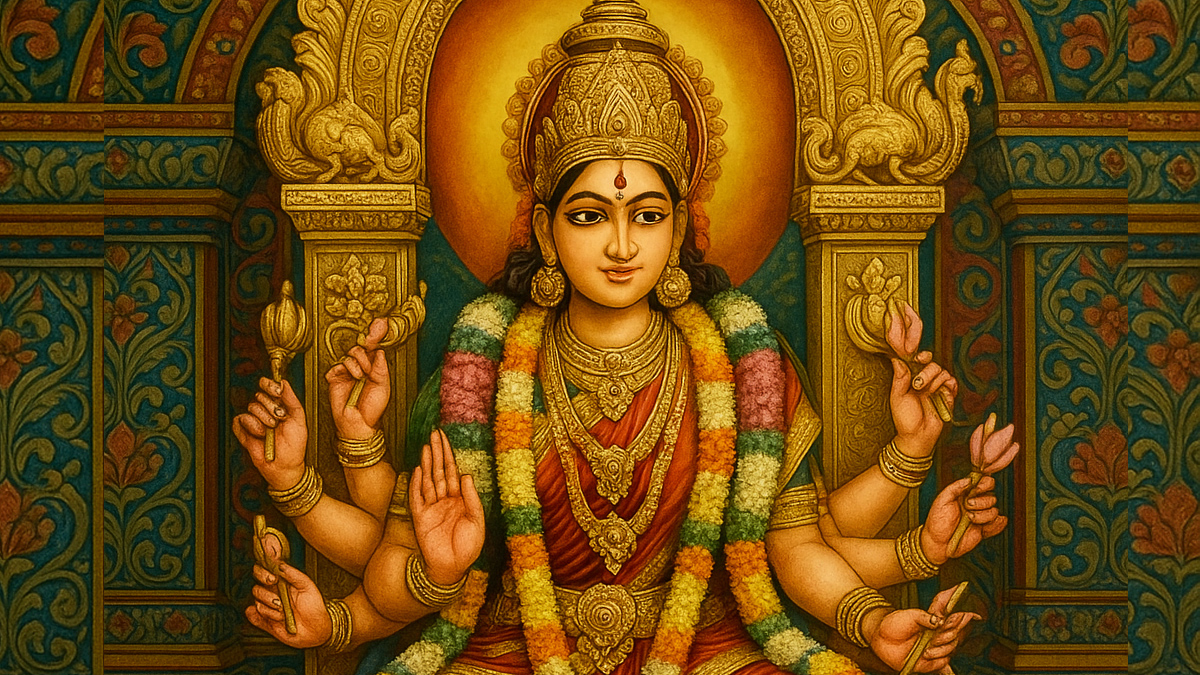
    Deities and Sub-DeitiesThe temple is dedicated to Meenakshi and Sundareswarar. Meenakshi's shrine features a green stone image of the goddess holding a lotus with a parrot. Sundareswarar's shrine houses a stone linga shaded under a cobra hood. Other deities include Ganesha, Murugan, Lakshmi, Saraswati, and various forms of Shiva.The temple also includes shrines for Nataraja, the dancing form of Shiva, and other significant figures from Hindu mythology. The presence of Vishnu in the temple's narratives and rituals highlights the integration of Shaivism and Vaishnavism traditions.
  • Offerings
    OfferingsDevotees offer various items to the deities, including flowers, fruits, and sweets. Special offerings are made during festivals and important rituals. The temple also has a tradition of offering rice balls to the Mukkuruni Vinayagar, a large Ganesha idol.Daily rituals include abhisheka (sacred bath), alangaram (decoration), neivethanam (food offerings), and deepa aradanai (lamp ceremony). These rituals are accompanied by music and Vedic recitations.
  • Architecture
    ArchitectureThe temple is an example of Dravidian architecture, featuring 14 gopurams, the tallest being the southern tower at 51.9 meters. The complex includes numerous sculpted pillared halls, such as the thousand-pillared hall, and shrines dedicated to various deities.The temple's layout follows the principles of the Shilpa Shastras, with concentric squares and streets radiating from the temple. The vimanas (towers above sanctums) of Meenakshi and Sundareswarar are gilded with gold, adding to the temple's grandeur.
  • Festivals
    FestivalsThe temple hosts a festival each month of the Tamil calendar. The most significant is the Meenakshi Thirukalyanam, celebrated in the Chithirai month (April), marking the divine marriage of Meenakshi and Sundareswarar. This festival attracts over a million people over 12 days.Other festivals include the Vasantham festival in Vaikasi, the Unjal Festival in Aani, the Mulai-Kottu festival in Aadi, and the Navaratri festival in Purattasi. Each festival involves elaborate rituals, processions, and cultural performances.
  • Religious Practices
    Religious PracticesThe temple is an active house of worship, with priests performing daily puja ceremonies. Volunteers and staff participate in rituals, such as moving an icon of Sundareswarar to Meenakshi's chamber every night and returning it in the morning.Devotees typically circumambulate the shrines clockwise before entering for darshana. The temple also conducts periodic ratha (chariot) processions, symbolizing the deities' presence in the secular life of the people.

FAQ's

Where is the Meenakshi Amman Temple located?

The Meenakshi Amman Temple is located in Madurai, Tamil Nadu, India. Specifically, it is situated in the Madurai district.

Which God is Sundareswarar?

Sundareswarar is a major Hindu deity.

What is the best time to visit Meenakshi Amman Temple?

The best time to visit is between October and March when the weather is pleasant and ideal for sightseeing. Avoid visiting during the peak summer months (April to June) due to high temperatures.

Why is Meenakshi Amman Temple famous among tourists and devotees?

The temple attracts over a million pilgrims and visitors during the annual 10-day Meenakshi Tirukalyanam festival, celebrated with much festivities, fervour and a ratha (chariot) procession during the Tamil month of Chittirai (overlaps with April-May in Georgian calendar, Chaitra in North India).

How to reach Meenakshi Amman Temple from near City or Town?

Nearest railway stations: Madurai Junction. From this station, buses or taxis are available to reach the temple directly. Nearest airport: Madurai Airport. From the airport, you can take a taxi or bus to Madurai city, where the temple is located.
Notifications
Settings
Clear Notifications
Notifications
Use the toggle to switch on notifications
  • Block for 8 hours
  • Block for 12 hours
  • Block for 24 hours
  • Don't block
Gender
Select your Gender
  • Male
  • Female
  • Others
Age
Select your Age Range
  • Under 18
  • 18 to 25
  • 26 to 35
  • 36 to 45
  • 45 to 55
  • 55+