


Dakshineswar Kali Temple, Greater Kolkata
Greater Kolkata, West Bengal

Dakshineswar Kali Temple History and Significance
The Dakshineswar Kali Temple was founded in the mid-19th century by Rani Rashmoni, a philanthropist and devotee of Kali. In 1847, she planned a pilgrimage to Kashi but had a vision of Kali instructing her to build a temple instead. She purchased land in Dakshineswar and completed the temple in 1855.
The temple complex was built on a 20-acre plot, which was partly an old Muslim burial ground. It took eight years and nine hundred thousand rupees to complete. The idol of Goddess Kali was installed on 31 May 1855, with Ramkumar Chhattopadhyay as the head priest. Ramakrishna later became the head priest, bringing fame to the temple.
Rani Rashmoni lived for only five years after the temple's inauguration. Before her death in 1861, she ensured the temple's maintenance by transferring property to the temple trust. Her sons-in-law continued celebrating Durga Puja in their premises.
Dakshineswar Kali Temple Pooja Timing
| Pooja Name | Timings |
|---|---|
| Mangala Arati | 4:00 AM |
| Bhog Arati | 12:00 PM |
| Sandhya Arati | 7:00 PM |
| Shayana Arati | 9:00 PM |
Dakshineswar Kali Temple Location Details
How to Reach Dakshineswar Kali Temple
By Road:
By Train:
By Air:
Dakshineswar is well-connected by road to major towns in West Bengal. State Transport Buses and private taxis operate regularly.
Nearest railway stations: Dakshineswar Railway Station and Howrah Junction. From these stations, buses or taxis are available to Dakshineswar.
Nearest airport: Netaji Subhas Chandra Bose International Airport, Kolkata. From the airport, you can take a taxi or bus to Dakshineswar via connecting cities.
Dakshineswar Kali Temple Nearby Temples

Dakshineswar Kali Temple Visitor Information & Tips
Best time to visit (season/months):
October to March is the best time to visit due to pleasant weather. Avoid the monsoon season (June to September) due to heavy rainfall.
Dakshineswar Kali Temple Interesting Facts
-
Legends BeliefsAccording to legend, Rani Rashmoni had a vision of Goddess Kali the night before her pilgrimage to Kashi. Kali instructed her to build a temple on the banks of the Ganges and worship her there. This vision led to the construction of the Dakshineswar Kali Temple.
-
Deities and Sub DeitiesThe main deity of the temple is Bhavatarini, a form of Kali. The temple complex also includes twelve Shiva shrines along the riverfront and a Radha-Krishna temple. These deities are worshipped by devotees who visit the temple.
-
OfferingsDevotees offer flowers, sweets, and fruits to the deities. Special offerings are made during festivals like Kali Puja and Durga Puja. These offerings are a way for devotees to express their devotion and seek blessings.
-
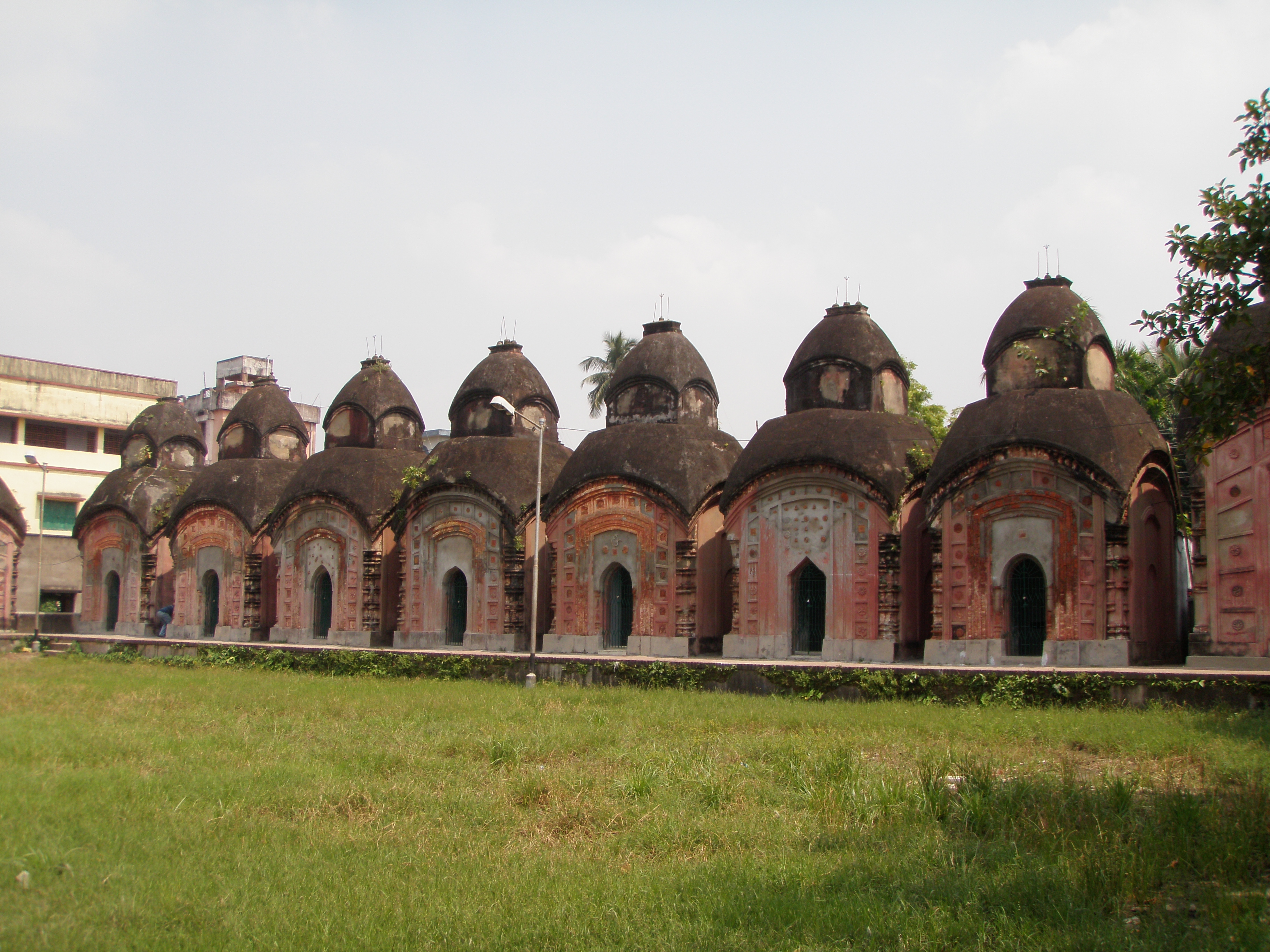
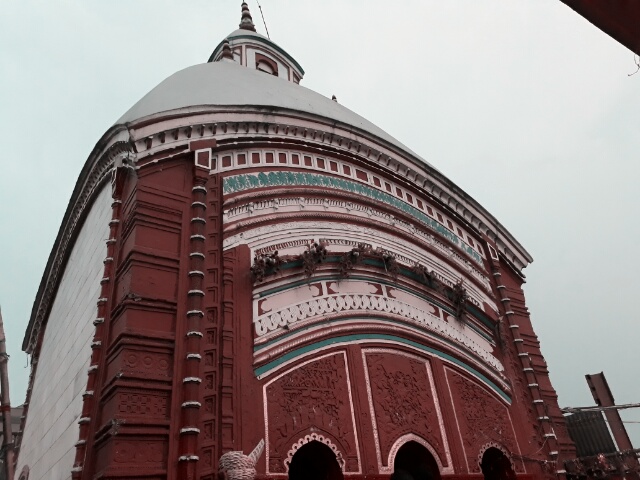
ArchitectureThe temple is built in the Navaratna style of Bengal architecture. It has three storeys with nine spires and stands on a high platform. The sanctum sanctorum houses the idol of Kali on a silver lotus throne.Adjacent to the main temple are twelve identical Shiva temples in the aat-chala style. The Radha-Krishna temple is located to the northeast of the complex, featuring a silver throne for the idols.
-
FestivalsThe temple celebrates several festivals, including Kali Puja, Durga Puja, Snana Yatra, and Kalpataru Day. These festivals attract large numbers of devotees who participate in rituals and seek blessings from the deities.
-
Religious PracticesDaily rituals and prayers are conducted at the temple. Devotees participate in these practices to seek spiritual solace and blessings. The temple is a significant place of worship for followers of Kali and other deities.
FAQ's
Where is the Dakshineswar Kali Temple located?
Which God is Sri Jagadishvari Bhavatarini Kalimata Thakurani?
What is the best time to visit Dakshineswar Kali Temple?
How to reach Dakshineswar Kali Temple from near City or Town?
In West Bengal

Near By Temples
-
 Sign in with Google
-
Block for 8 hours
-
Block for 12 hours
-
Block for 24 hours
-
Don't block


 Click it and Unblock the Notifications
Informed.
- Male
- Female
- Others
- Under 18
- 18 to 25
- 26 to 35
- 36 to 45
- 45 to 55
- 55+