


Project Mausam, India's answer to China's maritime might: Explained


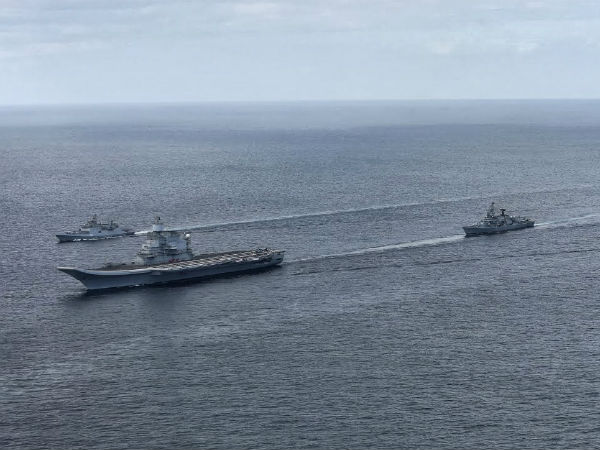
Project Mausam: India's answer to China's ‘Maritime Silk Road'
- It is Narendra Modi Government's most significant foreign policy initiative to counter-balance the maritime silk route of China.
- The project emphasises on the natural wind phenomenon, mainly the monsoon winds used by Indian sailors in ancient times for maritime trade.
- This initiative will enable India re-connect and re-establish communications with its ancient friends in the Indian Ocean region.
- It would lead to an enhanced understanding of cultural values and concerns.
- The project purposes to determine the Indian Ocean "world" - expanding from East Africa, the Arabian Peninsula, the Indian subcontinent and Sri Lanka to the Southeast Asian archipelago.
What is China's maritime silk route?
- It an initiative to develop regions along an ancient route connecting Western China with South and Central Asia.
- The aim of this initiative is to strengthen China's economic ties with various nations, including those within Asia and Europe.
- It proposes China to work with partners to develop maritime infrastructure, especially ports.
- Originally, the "maritime silk road" was proposed to foster cooperation and goodwill between China and the ASEAN countries.
- The "maritime silk road" is parallel to the land-based "new silk road," which runs westward from China through the Central Asian states.
- The route is likely to see China further intensify its naval activities in the region.
- It extends from its naval base in Hainan Island (South China Sea) to Bagamayo in Tanzania, Africa, with several of the ports encircling mainland India.
- Hambantota (Sri Lanka), Gwadar (Pakistan), Chittagong (Bangladesh) and Marao Atoll (Maldives) are the ports being built by China as per the initiative.
What is Silk Route?
- It is a series of trade and cultural transmission routes.
- It connected the West and East by linking traders, merchants and other persons from China to the Mediterranean Sea.
- It derives its name from lucrative Chinese silk trade, a major reason for the connection of trade routes into an extensive transcontinental network.



 Click it and Unblock the Notifications
 Sign in with Google